
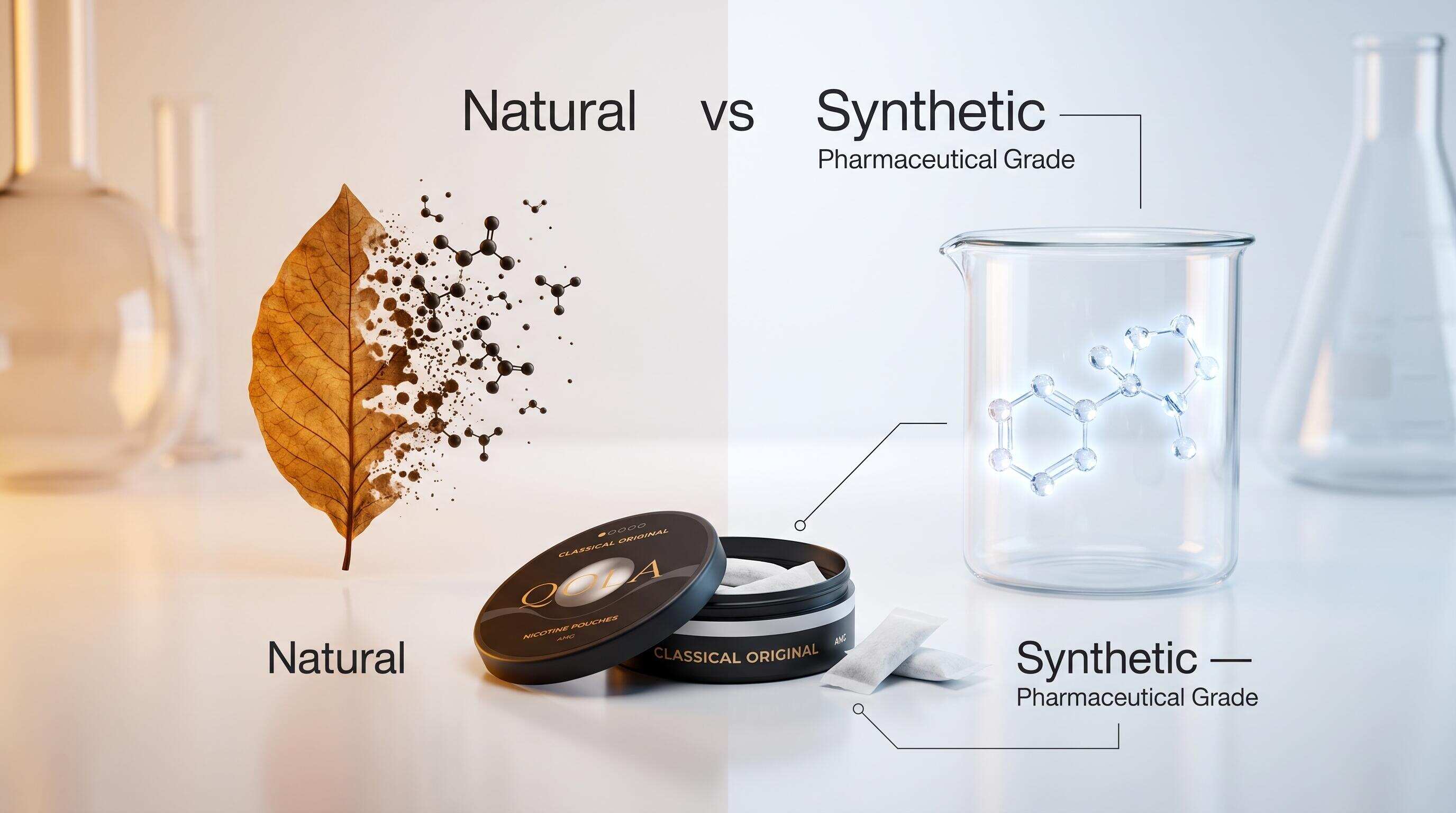
Synthetic vs. Natural Nicotine: What the Difference Actually Means for You
The single most important question for anyone switching to a modern nicotine alternative is this: does the source of the nicotine inside your pouch, patch, or lozenge actually matter to your health, your experience, and the cleanliness of the product? The direct answer is yes — and understanding why requires a clear look at how nicotine is extracted from tobacco plants versus how it is built from scratch in a laboratory setting.
This article compares tobacco-derived nicotine and synthetic (tobacco-free) nicotine across five meaningful criteria: purity, consistency, flavor expression, regulatory standing, and lifestyle alignment. At the end, we explain clearly why QOLA — a global tobacco-free nicotine pouch brand — chose pharmaceutical-grade synthetic nicotine as the foundation for every pouch in its lineup, and what that decision means for the people who use it every day.
Why the Source of Nicotine Matters: Defining the Criteria
Before declaring a winner in any comparison, it is worth defining what "better" actually means in context. Nicotine source is not merely a marketing talking point; it has measurable consequences across five dimensions that adult consumers genuinely care about.
Purity. Purity refers to the percentage of active nicotine in a finished ingredient, free from tobacco-specific nitrosamines (TSNAs), alkaloids, and other co-extractants that ride along when nicotine is pulled from the tobacco plant. TSNAs are a class of chemical compounds formed during the curing and processing of tobacco, and many of them are classified as probable or known carcinogens by health authorities. Even in a tobacco-free product, residual TSNAs from an impure nicotine source can be a hidden concern.
Consistency. Batch-to-batch uniformity determines whether the 6 mg labeled on a pouch delivers a reliably similar experience every time. Agricultural crops vary season to season; laboratory synthesis does not carry that same variability.
Flavor expression. Tobacco-derived nicotine carries a characteristic bitterness and tobacco undertone that can overpower or clash with flavors like mint, citrus, or berry. The cleaner the nicotine base, the more faithfully a flavor can shine through without masking agents.
Regulatory standing. Nicotine derived from tobacco plants has historically been regulated under existing tobacco frameworks in many markets. Synthetic nicotine occupies a distinct regulatory space that is still evolving in several jurisdictions, and understanding that landscape matters for consumers who want long-term product availability.
Lifestyle alignment. For consumers who are specifically trying to move away from tobacco — not just the smoke — knowing whether the nicotine in their pouch ever touched a tobacco leaf is a values-based question as much as a scientific one.
The Two Forms of Nicotine: A Plain-Language Introduction
Tobacco-Derived Nicotine
Tobacco-derived nicotine (TDN) is nicotine extracted from the leaves, stems, and waste materials of the Nicotiana tabacum plant — the same plant at the heart of cigarettes, cigars, and smokeless tobacco. The extraction process typically involves solvent-based separation followed by purification steps, but no matter how thorough those steps are, plant-based extraction leaves behind trace compounds.
TDN has been the dominant nicotine source for decades — it powers most nicotine replacement therapies (NRTs), e-liquids, and traditional nicotine pouches currently on the market. It is well-understood chemically, relatively inexpensive to produce at scale, and carries a long regulatory history. The challenge is that "tobacco-derived" means exactly what it says: the ingredient began its life inside a tobacco plant, with all the complex chemistry that entails.
A further technical note: naturally occurring nicotine in tobacco is predominantly in the (S)-nicotine form, also called L-nicotine, which is the biologically active isomer that binds to nicotine receptors. However, standard extraction and purification processes can introduce small amounts of the (R)-nicotine enantiomer — a mirror-image molecule — whose pharmacological profile differs from (S)-nicotine and is considered less desirable in a finished product.
Synthetic (Pharmaceutical-Grade) Nicotine
Synthetic nicotine is nicotine synthesized entirely from non-tobacco chemical precursors through a controlled laboratory process. The result is a molecule that is chemically identical to the nicotine found in tobacco but is built from scratch without any involvement of the tobacco plant.
The key advantage is what this process allows manufacturers to control. When nicotine is synthesized rather than extracted, producers can tune the ratio of (S)- to (R)-nicotine with precision, eliminate TSNA contamination at the source, and achieve purity levels that consistently meet pharmaceutical standards — typically expressed as greater than 99% pure (S)-nicotine. Because each batch is built to a defined chemical specification rather than harvested from a variable agricultural crop, consistency is structurally built into the production method rather than achieved by filtering out inconsistencies after the fact.
According to publicly available industry information reported by PR Newswire, synthetic nicotine can be produced with significantly reduced levels of tobacco-specific impurities compared to conventional tobacco-derived nicotine, making it an attractive ingredient for brands prioritizing a truly clean product profile.

ALT: Clean pharmaceutical-grade synthetic nicotine manufacturing environment highlighting purity and consistency advantages over tobacco-derived nicotine extraction
Head-to-Head Comparison: Synthetic vs. Tobacco-Derived Nicotine
| Criterion | Synthetic (Pharmaceutical-Grade) Nicotine | Tobacco-Derived Nicotine |
|---|---|---|
| Purity level | Pharmaceutical-grade; minimal non-nicotine compounds | Variable; trace TSNAs and alkaloids possible |
| Batch consistency | High; laboratory-controlled synthesis | Moderate; influenced by agricultural variability |
| TSNA presence | Effectively eliminated at source | Possible even after purification |
| Flavor compatibility | Neutral; does not interfere with added flavors | Characteristic tobacco note may alter flavor profile |
| (S)-Nicotine ratio | Engineered to high (S)-nicotine purity | Predominantly (S)-nicotine; (R)-nicotine contamination possible |
| Tobacco plant involvement | None — entirely tobacco-free at ingredient level | Yes — derived fromNicotiana tabacum |
| Regulatory classification | Distinct from tobacco-derived; evolving in key markets | Falls under traditional tobacco regulatory frameworks in many regions |
| Consumer lifestyle alignment (tobacco-free seekers) | Strong — genuinely tobacco-free ingredient | Weaker — tobacco-sourced, even if smoke-free in delivery |
The table above makes the trade-offs visible at a glance, but the written interpretation matters just as much.
On purity and ingredient cleanliness, synthetic nicotine holds a clear structural advantage. The absence of a tobacco extraction step means the most problematic co-compounds — TSNAs in particular — are simply never introduced into the production stream. This is not a minor distinction for health-conscious consumers; TSNAs have been the subject of ongoing scrutiny by regulatory agencies and public health bodies for years, specifically because of their association with carcinogenicity in tobacco products.
On flavor, the difference is one that QOLA's product development has experienced firsthand. When a nicotine base carries its own chemical fingerprint — a bitterness, a slight earthiness, a tobacco echo — it competes with the flavor profile the brand has carefully crafted. Using a clean, nearly neutral synthetic nicotine base allows the actual flavor experience to come through without interference or the need to add masking agents that introduce their own complexity.
On regulatory standing, the picture is more nuanced. As documented in the Congressional Research Service's public report on synthetic nicotine frequently asked questions, the regulatory treatment of synthetic nicotine has evolved and continues to evolve, particularly in the United States, where the FDA has extended its authority to cover synthetic nicotine products. For consumers, the practical implication is that well-established brands working with high-quality synthetic nicotine and operating in transparent compliance frameworks are the ones best positioned for long-term market stability. QOLA operates with this in mind across every market it serves.
Which Should You Choose? Matching the Right Nicotine Source to Your Situation
The "right" nicotine source is not universal — it depends on what a person is trying to achieve and what they value most. These scenario recommendations are designed to help you think through your own situation clearly.
If your primary goal is moving completely away from tobacco, choose synthetic pharmaceutical-grade nicotine. If you are transitioning from cigarettes specifically because you want to put tobacco behind you — not just the smoke, but the plant itself — then a product whose nicotine ingredient was never derived from tobacco is the only genuinely consistent choice. Synthetic nicotine means the nicotine in your pouch shares no agricultural origin with cigarettes. That matters for the integrity of the lifestyle shift you are making.
If you are sensitive to flavor or have found other nicotine products too harsh or bitter, choose synthetic nicotine-based pouches. The characteristic bite of tobacco-derived nicotine at higher concentrations is a real and common complaint. Pharmaceutical-grade synthetic nicotine, with its neutral flavor profile, allows flavors like cool mint, citrus burst, or tropical blends to deliver a cleaner, more enjoyable sensory experience without added bitterness.
If you currently use nicotine replacement therapy (NRT) products and are simply looking for something more convenient or discreet, tobacco-derived NRT may already suit your needs. Established NRT products with long regulatory track records serve many people well. However, if you are looking for a broader flavor range, more flexible strengths (such as QOLA's 4 mg through 20 mg range), and a genuinely tobacco-free ingredient, the upgrade to a modern synthetic nicotine pouch is a meaningful one.
If batch consistency and predictable strength are important to you as you manage your nicotine intake, synthetic pharmaceutical-grade nicotine is the stronger choice. Because each batch is produced to a defined chemical specification rather than extracted from an agricultural crop, the nicotine content per pouch is structurally more uniform — which matters when you are intentionally stepping down or maintaining a specific level.
Pros of pharmaceutical-grade synthetic nicotine at a glance:
- Genuinely tobacco-free at the ingredient level
- Higher and more consistent purity across production runs
- Neutral flavor that lets product flavors perform as intended
- Elimination of TSNA contamination at the source
- Better aligned with a tobacco-free wellness lifestyle
Cons worth acknowledging:
- Historically higher production cost (though this is narrowing as manufacturing scales)
- Regulatory classification continues to evolve in some jurisdictions
- Fewer decades of consumer track record compared to tobacco-derived NRT products
Questions & Answers
Q1: How is pharmaceutical-grade synthetic nicotine different from the nicotine in a regular nicotine patch or gum?
Pharmaceutical-grade synthetic nicotine is chemically identical to naturally occurring nicotine but is manufactured in a controlled laboratory environment from non-tobacco sources rather than extracted from tobacco plants. Standard nicotine patches and gums typically use tobacco-derived nicotine, which may carry trace tobacco-specific nitrosamines and alkaloids even after purification. Pharmaceutical-grade synthesis allows manufacturers to achieve a higher purity level and eliminate TSNA contamination at the production stage — a meaningful difference for consumers prioritizing a genuinely clean nicotine source.
Q2: Is synthetic nicotine safe compared to tobacco-derived nicotine?
Synthetic nicotine and tobacco-derived nicotine are the same molecule — (S)-nicotine — and share the same pharmacological properties when produced to a high purity standard. The safety distinction lies in what else accompanies the nicotine. Tobacco-derived nicotine can carry trace tobacco-specific nitrosamines even after processing, while pharmaceutical-grade synthetic nicotine eliminates those compounds at the source. All nicotine products carry the inherent properties of nicotine itself, including its addictive nature; the cleaner ingredient profile of synthetic nicotine simply removes an additional layer of impurity concern.
Q3: Does switching to synthetic nicotine pouches cost more than traditional tobacco products?
The retail price of nicotine pouches using synthetic pharmaceutical-grade nicotine varies by brand and market, but modern manufacturing efficiencies have narrowed the cost gap considerably. QOLA offers its tobacco-free nicotine pouches across a range of strengths — from 4 mg to 20 mg — designed to be competitively accessible relative to what many smokers spend daily on cigarettes. When you factor in the elimination of tobacco, smoke, ash, odor, and the social inconvenience of combustible products, the value equation frequently favors the switch.
Final Thoughts
The debate between synthetic and natural nicotine is not abstract chemistry — it has direct, practical consequences for the cleanliness of what goes into your body, the flavor experience you get from a pouch, and the alignment between your product choice and the lifestyle values driving your decision to move away from tobacco in the first place.
Key Takeaways:
- Pharmaceutical-grade synthetic nicotine is chemically identical to tobacco-derived nicotine but is manufactured without any tobacco plant involvement, eliminating TSNAs and agricultural variability at the source.
- Synthetic nicotine's neutral flavor profile allows for a cleaner, more authentic taste experience across diverse flavors.
- Higher batch-to-batch consistency in synthetic nicotine means more predictable nicotine delivery — an important factor when managing your intake intentionally.
- For consumers whose primary motivation is a genuine break from tobacco, synthetic nicotine is the only ingredient choice that delivers on that commitment fully.
- QOLA chose pharmaceutical-grade synthetic nicotine because it reflects the brand's core commitment: a modern, clean, tobacco-free nicotine experience that doesn't compromise on purity, flavor, or lifestyle integrity.
The next step is straightforward. If you have been using traditional tobacco products or even older-generation nicotine replacements, experiencing what a truly clean, pharmaceutical-grade synthetic nicotine pouch feels like is worth doing for yourself.
Ready to experience nicotine on your own terms? Explore the full range of tobacco-free nicotine pouches — crafted with pharmaceutical-grade purity and available in multiple flavors and strengths — at the QOLA website.
References
- ECigaretteDirect. "Synthetic Nicotine: Could It Save Vaping?"
https://www.ecigarettedirect.co.uk/blogs/ashtray-blog/synthetic-nicotine-vaping - qola.com. "QOLA Nicotine Pouches UK|No Smoking, No Vaping - Just qola".
https://qola.com/uk - PR Newswire. "Benefits of Synthetic Nicotine versus Tobacco-Derived Nicotine."
https://www.prnewswire.com/news-releases/benefits-of-synthetic-nicotine-versus-tobacco-derived-nicotine-301464036.html - YouTube / Zanoprima Lifesciences. "Introduction to Zanoprima's Synthetic Nicotine."
https://www.youtube.com/watch?v=FoYTrhdOqDE - EveryCRSReport.com. "Synthetic Nicotine: Frequently Asked Questions."
https://www.everycrsreport.com/reports/R47043.html
Note: Standards and regulations may be updated; please consult the latest official documents or qualified professional advisors for guidance specific to your jurisdiction.
Comments
There are no comments yet.