
Finding Your Fit: Why Nicotine Strength Is the Most Important Choice You'll Make
The single question every new QOLA user asks is this: which strength is right for me? The honest answer is that the right strength depends on your current nicotine habits, your tolerance, and what you want to feel — and getting it wrong in either direction is one of the most common reasons people give up on nicotine pouches before they've given them a fair chance.
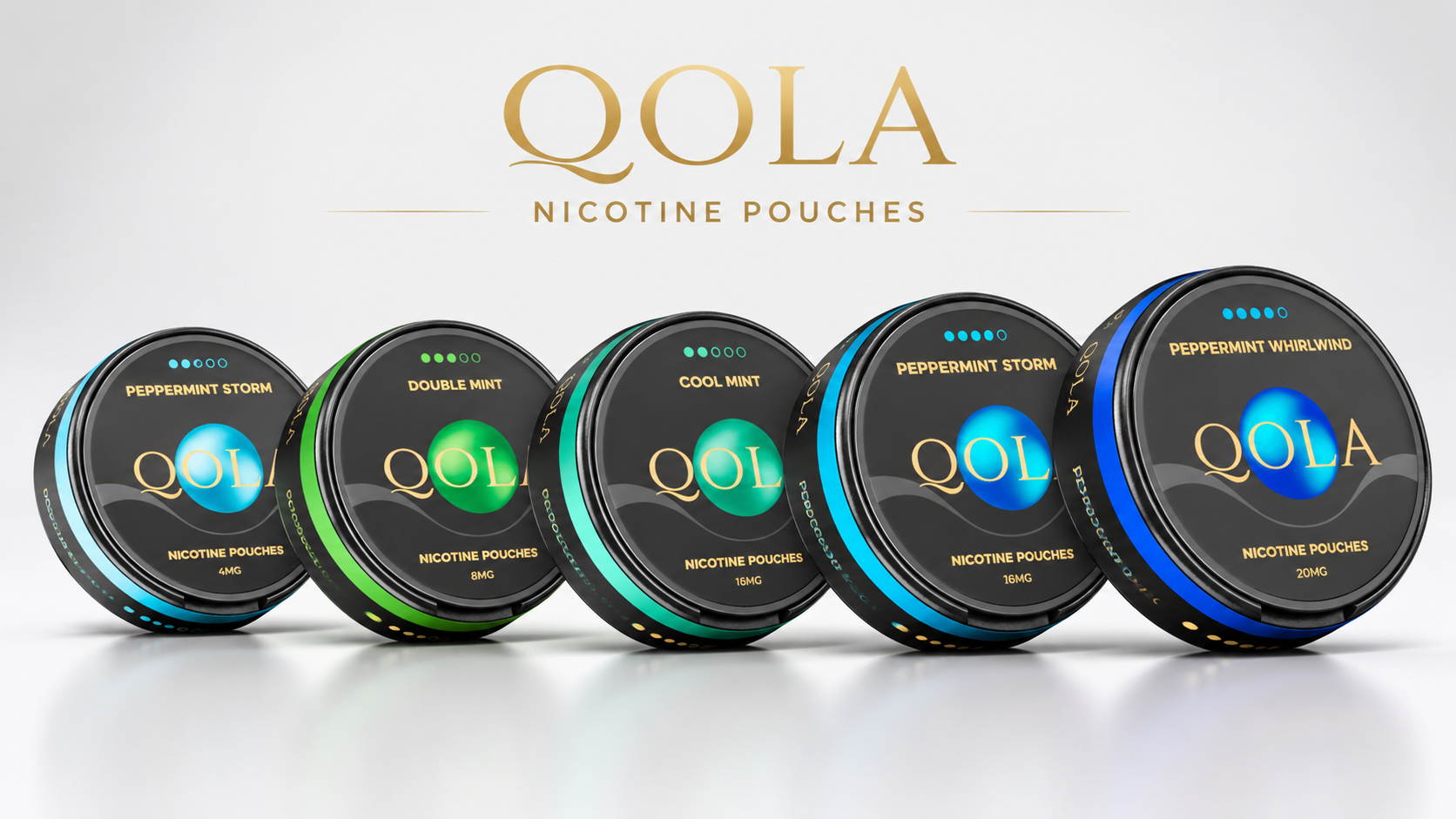
QOLA's strength range spans from 4mg at the lighter end to 20mg at the highest, giving users a genuinely flexible ladder to work with. Whether you're stepping away from a heavy smoking habit, cutting back from a moderate one, or simply curious about the cleanest possible nicotine experience, there is a point on that range calibrated for you. This article breaks down every tier, explains the practical differences between them, and gives you a clear framework for choosing well — and for avoiding the pitfalls that derail so many first-time users.
Who This Guide Is For — and Who Should Tread Carefully
Where this guidance applies:
- Adults aged 21 and over who currently use nicotine in some form — cigarettes, chewing tobacco, snus, or existing nicotine replacement products — and are actively considering tobacco-free pouches
- Health-conscious professionals and urban dwellers who want a discreet, odor-free alternative they can use throughout the day without stepping outside or vaping
- Current smokers looking for a structured transition path that respects their existing nicotine levels rather than demanding an abrupt drop
Where this guidance does not apply:
- Nicotine-naive individuals who have never used tobacco or nicotine products — starting with any strength of nicotine pouch is not advisable, and no tier of QOLA's range is intended as an introductory nicotine product for non-users
- Individuals with cardiovascular conditions, pregnancy, or other health factors that make nicotine use medically inadvisable — consult a qualified healthcare provider before changing any nicotine regimen
Why Strength Matching Matters More Than Most Brands Acknowledge
Nicotine delivery — the speed, volume, and consistency with which your body receives nicotine — varies considerably across product formats and strength tiers. A common mistake is treating strength as a simple "mild to strong" label, the way you might pick a coffee roast. In reality, strength selection is a form of dosing, and the consequences of under- or over-dosing are both real.
Under-dosing leads to unsatisfied cravings, which typically pushes users back to cigarettes or causes them to use pouches more frequently and in ways that are harder to control. Over-dosing, on the other hand, produces nausea, hiccups, dizziness, and a general sense of discomfort that discourages continued use. Principles of dosage calculation — well-established in pharmacological and clinical contexts — consistently emphasize that matching intake to established tolerance is the foundation of any effective regimen. That discipline applies squarely to nicotine pouch selection.
QOLA has built its range with this discipline in mind. The 4mg–20mg spectrum is not simply a marketing ladder; it reflects a genuine understanding that different users arrive with different baselines, and that those baselines should drive the starting point rather than personal aspirations about where you'd like to end up.
Navigating the QOLA Strength Range: A Practical Walkthrough
Step 1: Establish Your Current Nicotine Baseline
Before selecting a strength, spend a few days honestly tracking your current nicotine consumption. If you smoke, note how many cigarettes you get through daily and how quickly you reach for the next one after finishing. Light or social smokers — roughly ten or fewer cigarettes per day — typically have a lower established tolerance. Moderate smokers averaging a half-pack daily occupy a middle ground. Heavy smokers who go through a pack or more each day generally have significantly higher tolerance. This baseline is your anchor for every strength decision that follows.
Step 2: Map Your Baseline to the Right QOLA Tier
Use your baseline as a direct reference against QOLA's range. Light nicotine users tend to do well starting at the 4mg or 6mg tier, where the effect is present and satisfying without being overwhelming. Moderate users generally find the 8mg–12mg range to be the most accurate match to their existing intake. Heavy users accustomed to high daily consumption tend to require the 16mg or 20mg tier to feel genuinely satisfied and avoid the relapse pull back toward cigarettes. Resist the temptation to start lower than your baseline out of caution — under-serving your tolerance is itself a risk.
Step 3: Use, Assess, and Adjust Deliberately
Place your chosen pouch under your upper lip and allow 15–20 minutes for nicotine absorption before making any judgment about whether the strength is right. A mild tingling sensation is normal and indicates active release. If you feel satisfied and calm without any dizziness or nausea, your strength selection is likely correct. If you feel unmet craving after the session, consider moving up one tier. If you feel head-spinning discomfort or nausea, move down. Make adjustments one tier at a time, never two, and give each tier at least a few sessions before drawing conclusions.
Comparing QOLA's Strength Tiers Side by Side
Understanding where each tier sits relative to the others helps users make faster, more confident choices — and helps avoid the trial-and-error cycle that wastes both time and money. The table below summarizes the key practical dimensions across QOLA's range.
| Dimension | 4mg | 8mg–12mg | 16mg–20mg |
|---|---|---|---|
| Target user | Light/occasional nicotine users | Moderate daily users | Heavy or long-term smokers |
| Sensation intensity | Mild, gentle release | Moderate, steady satisfaction | Strong, full-bodied experience |
| Transition suitability | Ideal for tapering down from higher tiers | Good match for most current smokers | Appropriate starting point for heavy users |
| Recommended use case | Daytime maintenance, social settings | General daily replacement | Craving management, high-tolerance situations |
| Risk of under-dosing | Lower | Moderate | Lower |
| Risk of over-dosing | Lower | Moderate | Higher for new users |
This comparison should be read as a practical guide, not a rigid prescription. Individual factors — body weight, metabolism, smoking history, and stress levels — all influence how any given strength lands for a specific person.
Understanding Each Strength Tier in Depth
The 4mg Tier: Clean, Light, and Purposeful
The 4mg tier is QOLA's entry point, designed for adult users whose nicotine relationship is casual or who are actively working to reduce their overall intake. This strength delivers a genuinely perceptible nicotine experience — it is not a placebo — but the effect is measured and brief enough to suit users who don't want nicotine to dominate their day.
A pattern consistently seen among users who transition from cigarettes at this strength is that it works best for those who were already light smokers or who have already stepped down from higher doses. If you're a heavy smoker who starts here out of ambition rather than need, the most likely outcome is dissatisfaction and a return to cigarettes within days. That is not a failure of willpower; it is a mismatch of supply and demand.
The 8mg–12mg Tier: The Workhorse Range
The 8mg–12mg segment is where the majority of transitioning cigarette smokers find their home. This range delivers a satisfying, tobacco-free nicotine experience that is comparable in impact to what a moderate smoker gets from their daily habit — without the combustion, the tar, or the secondhand smoke that affects everyone around them.
What sets this tier apart from both ends of the spectrum is consistency. Users at this level report feeling settled rather than either underwhelmed or overwhelmed. For professionals who need to stay focused during long work sessions or urban dwellers who rely on discreet use in public spaces, this range offers the balance of effect and manageability that makes tobacco-free nicotine a genuinely practical daily tool.
The 16mg–20mg Tier: High-Strength for Genuine Need
The 16mg and 20mg tiers are QOLA's most potent offerings, and they exist for a reason: a significant portion of smokers have built substantial nicotine tolerance over years or decades, and offering them a weaker product than they need is a path to failure. At these strengths, users experience a robust, unmistakable nicotine effect that competes seriously with what a heavy cigarette habit delivers.
The most important caution around this tier is straightforward: it is not for curiosity seekers or users who want to test their limits. Starting at 20mg without an established high tolerance is the most reliable way to have a deeply unpleasant experience and swear off nicotine pouches entirely. Used appropriately — by users whose current consumption genuinely warrants it — this tier represents one of the most effective tobacco-free craving management tools available.
Advanced Considerations: Edge Cases, Misconceptions, and Smart Transitions
Moving Down the Ladder Intentionally
One of the most valuable features of a well-structured strength range is the ability to step down over time. Users who start at 16mg or 20mg and stabilize can, after a period of consistent use at that level, consider moving to 12mg, then to 8mg, then lower. This kind of structured reduction should be unhurried — moving too quickly through the tiers reintroduces craving pressure and increases the likelihood of relapse. In practice, periods of several weeks at each tier before stepping down tends to yield better outcomes than aggressive reduction schedules.
The Misconception That Lower Is Always Healthier
A persistent misconception in the tobacco-free space is that the goal should always be to use the lowest possible strength. This logic is appealing but flawed. A strength that doesn't satisfy the user's actual craving drives compensatory behavior — using more pouches per day, supplementing with cigarettes, or abandoning pouches altogether. The genuinely healthier choice is the strength that eliminates the drive to smoke, used as intended, rather than a lower strength that leaves the door to cigarettes open.
Flavor and Strength Interact
QOLA's range spans not just strengths but multiple flavor profiles. A subtlety that users often miss is that certain flavors can modulate the perceived intensity of nicotine release — cooling menthol-based flavors, for instance, can make a moderate strength feel crisper and more immediate. If you are evaluating a new strength tier, ideally test it first in a neutral or familiar flavor before changing both variables simultaneously.
When to Consult a Healthcare Provider
Strength selection becomes a more complex conversation for users who are also navigating medication regimens, managing chronic health conditions, or who experience persistent discomfort at any strength tier. Nicotine interacts with cardiovascular function and certain medications, and dosage principles established in pharmacological literature consistently emphasize the importance of professional guidance when individual health factors are in play.

ALT: Urban professional using a QOLA tobacco-free nicotine pouch discreetly at work, smoke-free and odor-free experience
Common Questions
Q1: How do I know if I've chosen the wrong strength?
The clearest signals are at the extremes. If you finish a session and immediately feel the pull of a craving — the same sensation that made you want a cigarette — your selected strength is too low for your current tolerance. If you feel dizzy, nauseous, or experience persistent hiccups during or shortly after use, you are absorbing more nicotine than your system is calibrated for and should drop one tier. These are physical signals, not judgments about willpower, and they respond reliably to a one-tier adjustment.
Q2: Is it safe to use multiple QOLA pouches in a single day?
Nicotine pouches are intended for one-at-a-time use, and stacking multiple pouches simultaneously is not advisable at any strength. Daily use frequency should be proportionate to your established nicotine habit — not exceeded as a way to compensate for a strength that isn't quite satisfying. If you consistently feel the need to use more pouches than your habit would suggest, the more efficient solution is to move up one strength tier rather than increase frequency. When in doubt, a healthcare provider can help you calibrate appropriate daily use.
Q3: How long does it take to find the right strength tier?
Most users identify their correct starting tier within one to three days of honest, single-tier testing. The evaluation window for each strength should be at least two to three individual sessions, since first-use sensations can be heightened by novelty. Users making a downward transition — deliberately stepping down from a higher tier — should allow several weeks per tier before concluding whether the new level is sustainable. Rushing the process is the most common pitfall and the most common reason transitions stall.
The Bottom Line
QOLA's 4mg–20mg nicotine pouch range is built on a simple but important principle: the right strength is the one that matches where you actually are, not where you wish you were. Three points are worth carrying forward from everything covered here.
First, start at your baseline, not below it. Under-dosing is as much a risk to a successful transition as over-dosing, because unsatisfied cravings drive people back to cigarettes with great reliability. Second, adjust one tier at a time and give each tier enough sessions to form an honest picture — snap judgments after one use lead to poor decisions. Third, use the full range as a tool. The fact that QOLA spans from light to high-strength is not incidental — it is what makes the brand useful for the full spectrum of adult nicotine users, including those who want to stay at a consistent level and those who want to work their way down over time.
The tobacco-free nicotine experience is cleaner, more discreet, and more socially versatile than smoking or vaping. Getting the strength right is what makes that experience genuinely satisfying rather than merely theoretical.
Explore the full QOLA strength range and find your fit at the QOLA website — where tobacco-free nicotine meets modern, intentional living.
Sources & Citations
- Dosage Calculations For Dummies. "Dosage Calculations For Dummies".
https://www.google.com/goto?url=CAESfwHEIkXXOhkQuwox8VEyvUad3Wk3UyH4T9lFGC9pb145EnRmOILczyKiLt5ZpPxGPJc177V4lbLBhtj20F8voN6ngmqWeLkw00ZSaYzlHIdV8FdooxynxK3JnnyFnorWtlA-_pTsGjZqEqz9vlMLNyZ-e9vwvI_m4L9sCpRfcII - dosage calculations. "Dosage Calculations".
http://hy.health.gov.il/_uploads/dbsattachedfiles/nu325.pdf - qola.com. "QOLA Nicotine Pouches UK|No Smoking, No Vaping - Just qola".
https://qola.com/uk - Dimensional Analysis Method for Dosage Calculation. "Dimensional Analysis Method for Dosage Calculation".
https://www.osmosis.org/learn/Dimensional_Analysis_Method_for_Dosage_Calculation
Note: Standards and guidelines may be updated; please check the latest official documents or consult qualified professional advisors for guidance specific to your circumstances.
Comments
There are no comments yet.