
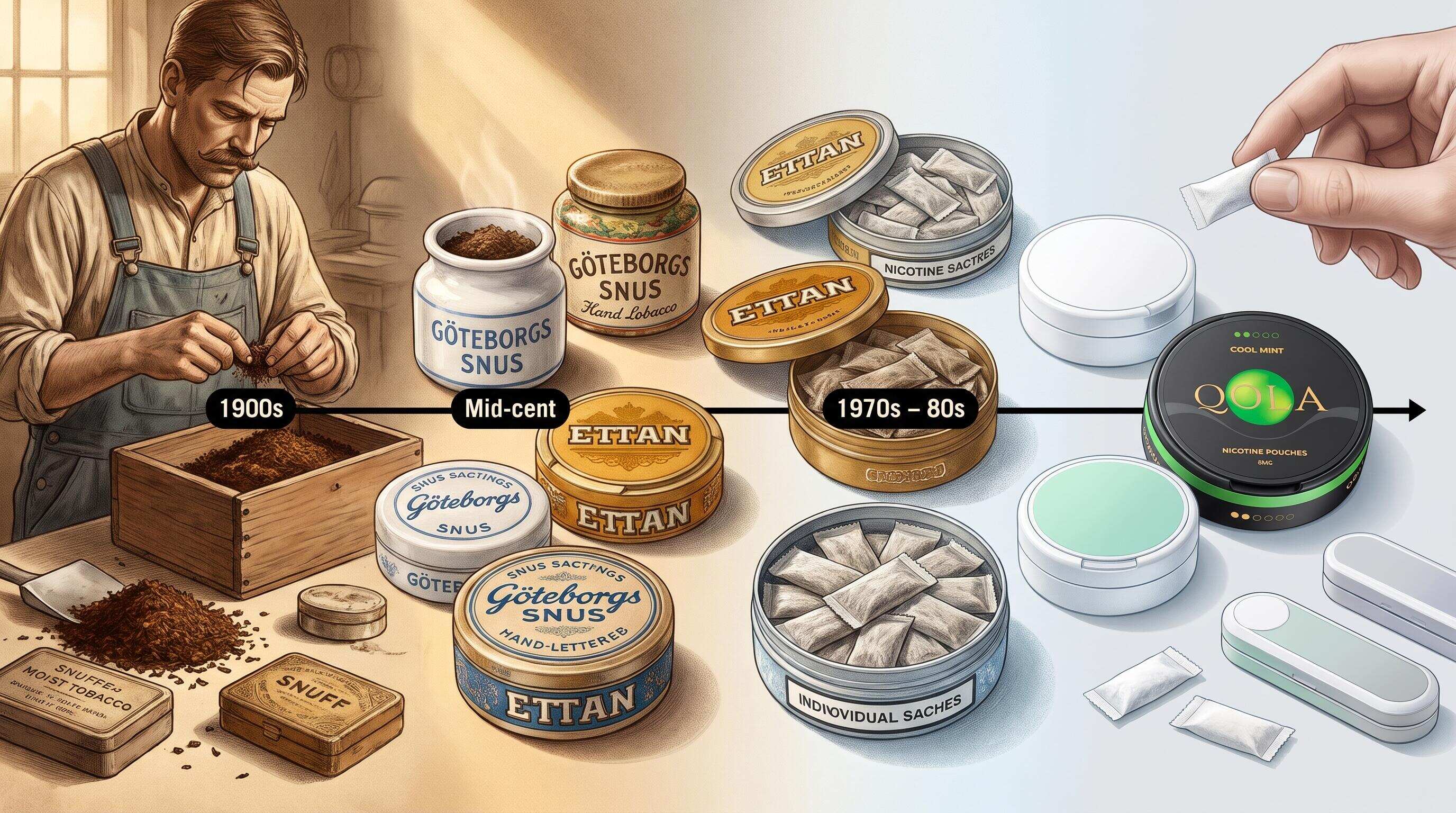
How Nicotine Pouches Grew From a Nordic Tradition Into a Global Wellness Movement
Imagine standing in a Swedish convenience store in the 1960s and watching a local worker tuck a small pouch beneath his upper lip — no matches, no smoke, no fuss. That simple act was the quiet ancestor of an entire product category that today serves millions of adults worldwide who want nicotine without the baggage of combustion. The journey from that Nordic staple to the tobacco-free nicotine pouches lining modern shelves is a century-long story of chemistry, culture, public health debate, and consumer demand for cleaner choices.
This article traces that evolution across its most significant turning points, organized as a series of key milestones you can read in sequence or dip into individually. Whether you are a curious newcomer who has never heard of snus or a seasoned nicotine user weighing your next move, understanding where this category came from helps you make a more informed choice about where you go from here. Each milestone below was selected because it represents a genuine shift in how society produces, regulates, or consumes smokeless nicotine — not just a footnote, but a fork in the road.
The Key Milestones: Tracing a Century of Smokeless Nicotine Innovation
The Origins of Swedish Snus and Oral Tobacco Culture
Swedish snus — pronounced "snoos" — is a moist, ground tobacco product that is placed under the upper lip and held there while nicotine is absorbed through the oral mucosa, without spitting or combustion. Snus originated in Scandinavia in the early 18th century and evolved from dry nasal snuff, which users would inhale through the nostril. By the 19th century, Swedish manufacturers had shifted the format to a moist, portioned pouch that sat discreetly in the mouth, and by the early 20th century snus was deeply woven into Swedish working-class culture.
What made snus distinct was not just its format but its production method. Swedish producers applied a steam-pasteurization process rather than fermentation, which dramatically reduced the levels of tobacco-specific nitrosamines — the primary carcinogenic compounds found in most smokeless tobacco. This distinction would later become central to public health arguments about relative harm reduction, as researchers at institutions such as the Karolinska Institutet began comparing snus users' health profiles with those of cigarette smokers.
Best for: Understanding the cultural and scientific foundation from which all modern oral nicotine products descend.
Watch out: Snus still contains tobacco leaf, which means it carries a different risk profile from the tobacco-free pouches that came later — a distinction that matters enormously for health-conscious consumers.
The European Regulatory Divide and the Swedish Exception
Snus became a flashpoint in European drug and tobacco policy in the late 20th century. When Sweden joined the European Union in 1995, the EU maintained a ban on the sale of snus that had been introduced in 1992, citing concerns about the product's potential to serve as a gateway to smoking and its association with oral cancer in certain high-use populations. Sweden negotiated a formal exemption, allowing snus to remain legally sold within its borders — the only EU member state with this status.
This regulatory asymmetry created an interesting real-world experiment. Sweden consistently recorded some of the lowest rates of tobacco-related lung disease and overall smoking prevalence in the EU, a pattern that researchers and public health advocates began linking to the widespread substitution of cigarettes with snus. Organizations including Public Health England — now the UK Health Security Agency — referenced Swedish population data when evaluating the relative risks of smokeless products compared to combustible tobacco.
Best for: Grasping why geography and regulation shape what nicotine products are available to consumers in different markets.
Watch out: The Swedish exception is a legal carve-out for a specific product in a specific jurisdiction, not a blanket endorsement of all oral tobacco products — context is everything when interpreting these rules.
The Science of Harm Reduction Enters the Mainstream
The concept of tobacco harm reduction — defined as the strategy of reducing the health risks associated with nicotine use by offering less harmful delivery methods rather than demanding immediate cessation — gained significant academic traction from the 1990s onward. Researchers argued that for adult consumers who would not or could not quit nicotine entirely, directing them toward lower-risk alternatives was a rational public health response.
Smokeless tobacco, and Swedish snus in particular, became one of the central case studies in this debate. Studies published in peer-reviewed journals explored the differences in risk between oral nicotine delivery and pulmonary delivery through combustion. The core finding, consistently reproduced in population-level research, was that the act of burning tobacco and inhaling the resulting smoke accounts for the vast majority of smoking-related disease burden. Nicotine itself, while addictive, is not the primary driver of smoking-related cancers or cardiovascular disease in most research frameworks — a nuance that opened the door to thinking about nicotine and tobacco as separable concerns.
Best for: Adults who want to understand the scientific rationale behind why tobacco-free nicotine products are positioned as a smarter alternative.
Watch out: Harm reduction is a spectrum, not a binary — "less harmful" does not mean "harmless," and responsible use always involves awareness of one's own health circumstances.
The Emergence of Nicotine Replacement Therapy Bridges the Gap
Before tobacco-free pouches arrived, the pharmaceutical industry introduced nicotine replacement therapy (NRT) — a category that includes nicotine gum, patches, lozenges, and inhalers. NRT products, which deliver pharmaceutical-grade nicotine without any tobacco, were the first commercially available proof of concept that nicotine could be separated entirely from the tobacco plant and still satisfy the urge that drives most smoking behavior.
NRT products were regulated as medicines, which gave them credibility in clinical settings but also made them feel clinical and transactional — tools for quitting rather than lifestyle products that fit naturally into daily routines. Nicotine gum, for instance, requires a specific chewing technique and produces a noticeably medicinal taste. The patch delivers nicotine slowly and passively, without the ritual satisfaction many nicotine users seek. These limitations, well documented in user experience research, left a gap in the market: adults who wanted a cleaner, tobacco-free nicotine option that felt contemporary rather than pharmaceutical.
Best for: Understanding why NRT laid the technical groundwork for modern nicotine pouches but could not fully replace the experiential appeal of snus-style products.
Watch out: NRT products are clinically validated cessation aids with established regulatory frameworks, which is different from the lifestyle-positioning of newer nicotine pouches — the two serve overlapping but distinct consumer needs.
Scandinavian Manufacturers Develop the First Tobacco-Free Pouches
The direct predecessor of today's tobacco-free nicotine pouches emerged in the early 21st century, when Swedish manufacturers — already expert in portioned snus technology — began experimenting with pouches that replaced the tobacco filler with plant-fiber materials while retaining the nicotine and flavor formulation. The result was a product that looked and felt like portioned snus but contained no tobacco leaf whatsoever.
This innovation was significant for several reasons. First, it allowed manufacturers to market the product in jurisdictions where tobacco-containing snus was banned, most notably across EU member states outside Sweden. Second, it removed the tobacco-specific nitrosamines associated with fermented or processed tobacco, addressing one of the residual concerns that public health advocates had maintained even about pasteurized snus. Third, it opened the door to a wider range of flavors and textures, since the base material was neutral rather than tobacco-flavored by default. In our experience tracking this category's development, this formulation shift is the single most consequential innovation in the smokeless nicotine space since pasteurized snus itself.
Best for: Consumers who want to understand the technical leap that separates modern nicotine pouches from their snus ancestors.
Watch out: Not all nicotine pouches are identical in formulation — the quality of the plant-fiber base, the purity of the nicotine source, and the flavor design vary meaningfully across brands.
Global Expansion and the Rise of Lifestyle Branding
By the 2010s, tobacco-free nicotine pouches had moved from a Scandinavian specialty product to a globally distributed category. Major tobacco companies acquired or launched their own pouch brands, and a wave of independent brands entered the market with a distinctly different pitch — not "quit smoking" messaging borrowed from NRT, but a lifestyle-forward identity aimed at adults who wanted nicotine to fit into a modern, health-conscious life rather than define a habit they were trying to escape.
This branding shift reflected a genuine shift in consumer demand. A pattern we consistently see across the broader wellness market is that adult consumers in the 25–45 age bracket respond more positively to empowerment language than to cessation language. Products that say "this fits your life" outperform products that say "use me to fix your problem." Nicotine pouches, with their discreet format, absence of odor, and wide flavor diversity, were uniquely suited to this positioning. They could be used in a business meeting, on a flight, in a gym locker room — anywhere a cigarette or even a vaping device would be unwelcome.
Best for: Understanding why modern nicotine pouches resonate with urban professionals and health-conscious consumers in a way that earlier nicotine alternatives did not.
Watch out: Lifestyle branding can sometimes obscure product quality differences — it is worth looking past the packaging to evaluate nicotine strength, ingredient transparency, and flavor authenticity.
Regulatory Modernization and Market Maturation
As nicotine pouches scaled globally, regulatory bodies began developing frameworks to govern them. Because tobacco-free pouches do not fit neatly into existing tobacco product definitions — they contain no tobacco — their regulatory classification varies by country. Some jurisdictions regulate them as tobacco-related products by function; others create distinct categories; still others leave them in a legal gray zone pending further review.
The U.S. Food and Drug Administration, for instance, has worked to extend its regulatory authority over nicotine-containing products beyond traditional tobacco, while bodies in the United Kingdom and across the EU have engaged in ongoing consultation about appropriate standards for pouch products. This regulatory evolution is a sign of the category's maturity — products that regulators ignore are products no one is buying. The growing attention from public health agencies also reflects an opportunity: establishing clear quality and safety standards protects consumers and legitimizes the responsible players in the market.
Best for: Consumers and industry observers who want to understand the current regulatory landscape and what it means for product quality and market access.
Watch out: Regulatory status is not a proxy for product safety on its own — a product can be legally sold in a given market while still varying widely in ingredient quality and manufacturing standards.
The Modern Nicotine Pouch Experience: Flavors, Strengths, and Consumer Choice
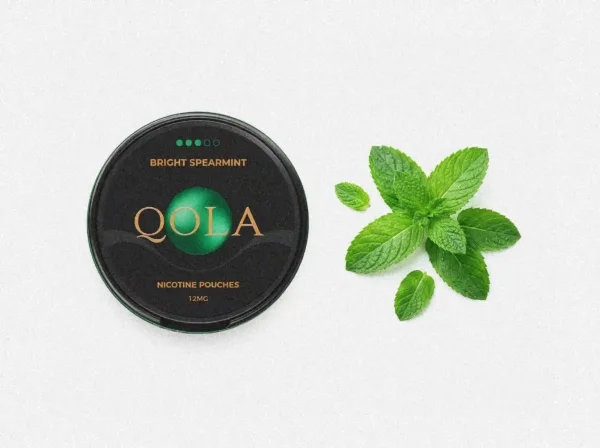
Today's tobacco-free nicotine pouch market offers consumers a genuinely diverse range of choices in terms of flavor profiles and nicotine strengths, allowing for a personalized experience that was unimaginable in the era of one-size-fits-all tobacco products. Brands like QOLA — a global tobacco-free nicotine pouch brand purpose-built for the modern, smoke-free lifestyle — exemplify this evolution: offering multiple flavors and nicotine strengths ranging from 4mg to 20mg, designed to give adult users control over both the sensory experience and the intensity of their nicotine delivery.
The pouch format itself delivers nicotine through the oral mucosa, releasing it steadily over a session that typically lasts between 30 and 60 minutes. Because there is no combustion, no vapor, and no tobacco, the experience is clean and discreet — no smoke smell on clothing, no visible exhale, no secondhand exposure concerns for people nearby. For consumers who have spent years managing the social friction of cigarettes, this represents a qualitative change in how nicotine fits into daily life. In our work with consumers navigating the transition away from combustible tobacco, the most commonly reported benefit of pouches is not the nicotine itself but the absence of the inconveniences that surrounded it.
Best for: Current smokers seeking a cleaner transition, professionals who need a discreet option, and lifestyle-oriented consumers ready to modernize their nicotine routine.
Watch out: Nicotine strength selection matters — starting at a strength that is too low may not satisfy cravings, while starting too high can produce discomfort. Most experienced users recommend beginning at a moderate strength and adjusting based on personal response.
Quick Comparison at a Glance
Summarizing this century-long evolution into a single reference point helps clarify how each era relates to the next and where today's tobacco-free pouches sit in the broader landscape.
| Milestone | Best For | Key Strength | Limitation |
|---|---|---|---|
| Traditional Swedish Snus | Understanding the category's roots | Steam-pasteurized; reduced nitrosamines vs. other oral tobacco | Still contains tobacco leaf |
| European Regulatory Divide | Grasping policy context | Created a natural public health experiment | Country-specific; not globally applicable |
| Harm Reduction Science | Evidence-based decision making | Population-level data supports relative risk framework | "Less harmful" is not "harmless" |
| Nicotine Replacement Therapy | Clinical cessation support | Pharmaceutical-grade nicotine; no tobacco | Clinical feel; limited lifestyle appeal |
| First Tobacco-Free Pouches | Understanding the formulation breakthrough | No tobacco, broader market access | Quality varies by manufacturer |
| Global Lifestyle Branding | Seeing how consumer culture shaped the market | Empowerment positioning; wide demographic reach | Branding can obscure quality differences |
| Regulatory Modernization | Tracking legal and safety standards | Framework development protects consumers | Regulatory status alone is not a quality guarantee |
| Modern Pouch Experience | Choosing a contemporary nicotine alternative | Flavor diversity, strength control, discreet use | Requires thoughtful strength selection |
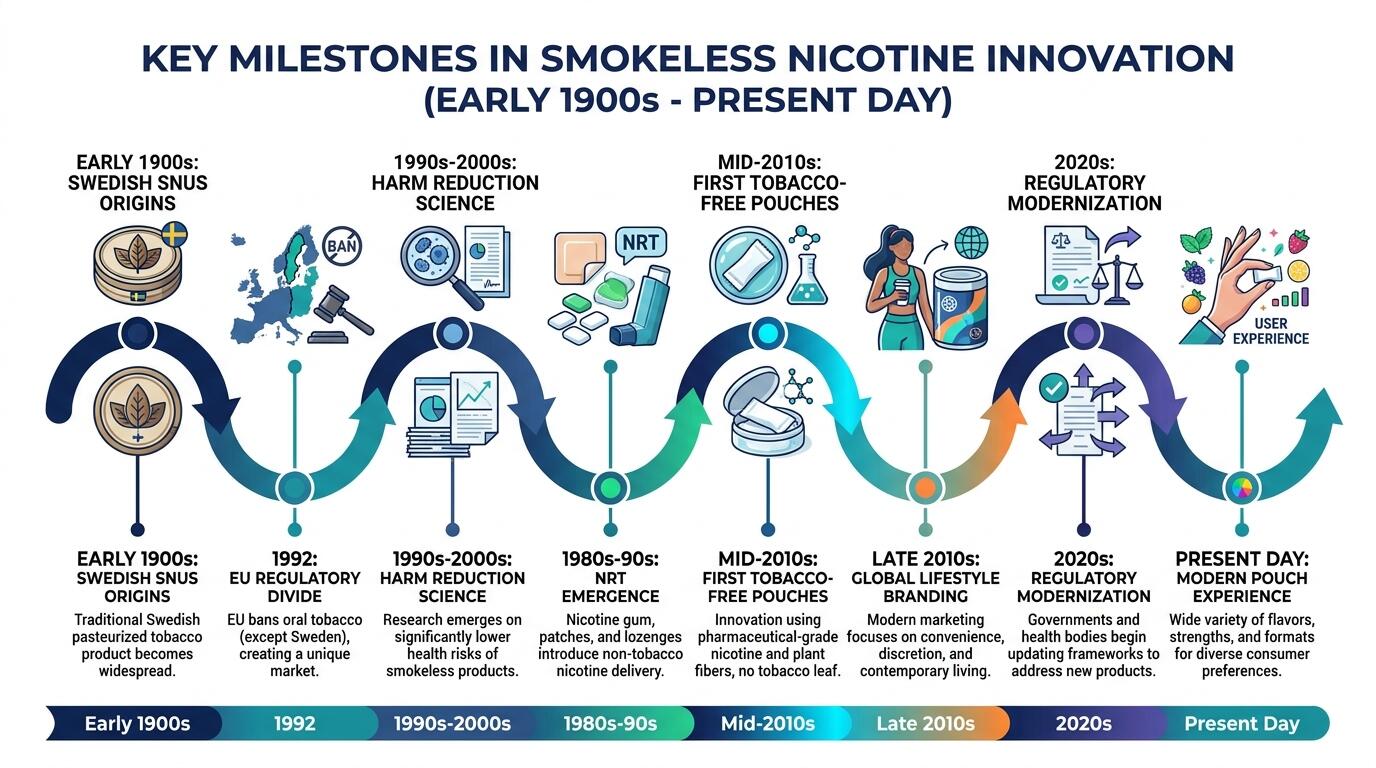
ALT: Timeline infographic showing the evolution from traditional Swedish snus to modern tobacco-free nicotine pouches across a century of innovation in smokeless nicotine delivery
How to Choose the Right Nicotine Pouch for Where You Are Right Now
Choosing the right tobacco-free nicotine pouch depends less on which brand is most popular and more on where you are in your personal nicotine journey. If you are transitioning directly from cigarettes, your primary consideration should be nicotine strength — matching your current intake to a pouch strength that prevents the discomfort of under-delivery, which is the most common reason new pouch users revert to smoking. A moderate-to-higher strength is typically the right starting point for a heavy smoker.
If you are already using another oral nicotine product — snus, NRT gum, or a competing pouch brand — you are likely a candidate for exploring the flavor dimension of your choice. Modern tobacco-free pouches have moved far beyond mint and tobacco flavors into fruit profiles, citrus blends, and sophisticated herbal combinations. This variety matters because sensory satisfaction is a real and legitimate part of the nicotine experience, and a flavor you genuinely enjoy makes consistent use far more sustainable.
A common misconception in this space is that all nicotine pouches are essentially the same product with different labels. In practice, the quality of the nicotine source, the texture and comfort of the pouch material, the flavor engineering, and the release profile — how quickly and evenly nicotine is delivered during a session — vary considerably across the market. These differences are worth investigating before committing to a product, particularly if you are making the switch from a long-standing tobacco habit and need a genuinely satisfying alternative.
For urban professionals and frequent travelers, discretion and convenience are often the deciding factors. Tobacco-free pouches require no lighter, no designated smoking area, and no recovery time from the smell. They fit into a laptop bag, a gym kit, or a jacket pocket without creating any of the social or logistical friction associated with cigarettes or even with vaping devices.
Questions & Answers
Q1: How did Swedish snus influence the development of modern tobacco-free nicotine pouches?
Swedish snus provided the foundational format — a small, portioned pouch placed under the upper lip — and the manufacturing expertise in oral nicotine delivery. When Scandinavian producers sought to expand beyond markets where tobacco-containing snus was banned, they adapted the pouch design by replacing the tobacco filler with plant-fiber materials. This preserved the user experience while eliminating the tobacco content entirely, creating the direct ancestor of the tobacco-free nicotine pouches available globally today. The Swedish tradition of steam-pasteurized production also established quality benchmarks that informed later formulation standards.
Q2: Are tobacco-free nicotine pouches safer than traditional cigarettes?
Tobacco-free nicotine pouches eliminate combustion, which public health research consistently identifies as the primary driver of smoking-related disease. By removing tobacco and the burning process, pouches avoid the thousands of chemical compounds generated by cigarette smoke, including carbon monoxide and tobacco-specific nitrosamines. Regulatory bodies including the U.S. Food and Drug Administration and the UK Health Security Agency have engaged with the harm reduction framework that supports smokeless alternatives, though no nicotine product is entirely risk-free. Adults seeking a cleaner alternative should consult current guidance from recognized health authorities rather than relying solely on product marketing.
Q3: How long does it take to transition from cigarettes to nicotine pouches?
The transition timeline varies by individual and depends heavily on nicotine strength matching and consistency of use. Many users report that selecting an adequate nicotine strength from the outset — rather than starting too low — is the single most important factor in a smooth transition. Some adults adapt within days; others take several weeks to adjust to the oral delivery format and the absence of the inhalation ritual. Flavors play a supporting role: a flavor profile that is genuinely satisfying tends to accelerate the transition by replacing the sensory reward of smoking with a comparable but cleaner alternative.
The Bottom Line
The story from Swedish snus to modern tobacco-free nicotine pouches is not a straight line — it winds through public health debates, regulatory battles, pharmaceutical innovation, and a consumer culture that increasingly demands products that fit a wellness-forward lifestyle. Three points define the core of this evolution: first, the separation of nicotine from tobacco is a genuine scientific and consumer advance, not a marketing construct; second, format and experience matter as much as nicotine delivery in determining whether an alternative actually replaces combustible tobacco for real people; and third, the best products in this category combine formulation quality with flavor authenticity and transparent strength options to give adult consumers genuine control.
For anyone at the beginning of this journey — whether you are still smoking, already experimenting with snus, or somewhere in between — the modern nicotine pouch market offers more choice, more information, and more sophisticated products than any previous generation of smokeless nicotine alternatives. The century-long path from a Nordic tradition to a global lifestyle category has produced something genuinely worth exploring.
Ready to experience nicotine on your own terms? Explore the full range of tobacco-free options at QOLA — a modern nicotine pouch brand delivering clean, discreet, and flavorful experiences across a spectrum of strengths designed to fit your life without smoke, vapor, or odor.
Sources
- qola.com. "QOLA Nicotine Pouches UK|No Smoking, No Vaping - Just qola".
https://qola.com/uk - U.S. Food and Drug Administration. "Tobacco Products — Regulatory Overview and Guidance".
https://www.fda.gov - World Health Organization. "Tobacco — Health Topics and Policy Resources".
https://www.who.int - UK Health Security Agency. "Evidence Review of E-Cigarettes and Heated Tobacco Products — Smokeless Nicotine Guidance".
https://www.gov.uk
Note: Standards may be updated; please check the latest official documents or consult professional advisors.

Comments
There are no comments yet.