
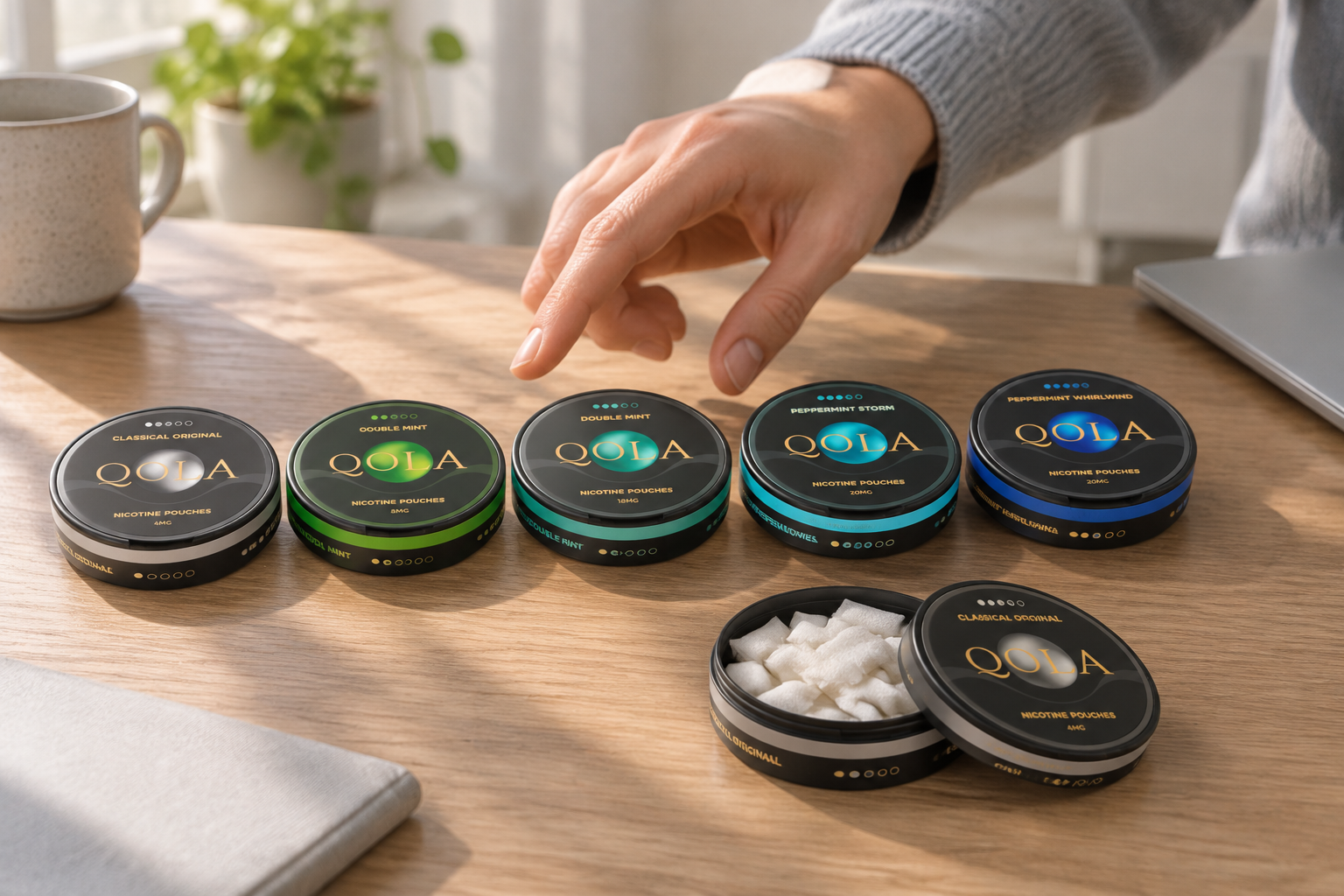
Finding Your Starting Point: A Beginner's Guide to Choosing Nicotine Strength
You've decided to leave cigarettes behind, or maybe you're simply curious about a cleaner way to satisfy a nicotine craving — and now you're staring at a lineup of nicotine pouches ranging from 4mg to 20mg, wondering where on earth to begin. It's one of the most common crossroads we see newcomers arrive at, and it's also one of the most consequential decisions you'll make as you start your smoke-free journey. Choose too low, and you may feel unsatisfied and reach for a cigarette within the hour. Choose too high, and you risk an uncomfortable first experience that puts you off the whole idea.
This guide exists to cut through that confusion. It's written for adult nicotine users — whether you're a current smoker, a vaper considering a switch, or someone entirely new to nicotine products — who want a practical, honest framework for choosing a starting nicotine strength. By the end, you'll know how to read your own nicotine habits, interpret the numbers on a pouch label, and make a confident, informed first choice.
Before You Start: What You Need to Know Before Picking a Strength
Choosing the right nicotine strength is not a guessing game — it's a matter of honest self-assessment. Before you browse a product lineup, you need a clear picture of your current nicotine relationship: how much you consume, how often, and what you use it for.
The most useful piece of prior knowledge is your existing consumption pattern. A person who smokes half a pack of light cigarettes a day occupies a very different nicotine space than someone who smokes a pack of full-strength cigarettes before noon. Similarly, a casual vaper who takes a few puffs during a lunch break has different needs than someone who chain-vapes throughout the day. Neither profile is better or worse — they simply require different starting points.
You also need a basic understanding of what nicotine strength labels actually mean. With nicotine pouches like those in the QOLA range, strength is expressed in milligrams (mg) — typically referring to the total nicotine content per pouch. A higher number means more nicotine is available per use; a lower number means a gentler, more moderate experience. This is different from cigarettes, where nicotine delivery is affected by draw depth, combustion temperature, and inhalation habits, so a direct milligram-for-milligram comparison isn't always meaningful. What matters is understanding roughly where you sit on the consumption scale and mapping that to a pouch strength range.
Checklist before starting:
- Honestly estimate how many cigarettes, cigars, or vaping sessions you have per day
- Note whether you use nicotine primarily for stress relief, habit, or enjoyment — this affects how strong a "hit" you actually need
- Understand that nicotine pouches deliver nicotine through the gum lining, not the lungs — absorption is different and may feel subtler at first
- Consider whether you have any sensitivities (nausea, headaches) to nicotine, as these are early indicators that lower strengths suit you better
- Approach your first pouch experience as an experiment, not a commitment — your starting choice is adjustable
The time investment here is low: a few minutes of honest reflection before your first purchase can save you a frustrating (or even uncomfortable) first experience.
Step-by-Step Instructions: How to Choose Your First Nicotine Strength
Step 1: Categorize Yourself as a Light, Moderate, or Heavy Nicotine User
The first step in choosing nicotine pouch strength is determining which of three broad usage categories describes you most accurately. Light users are those who smoke fewer than ten cigarettes a day or vape occasionally; moderate users smoke around ten to twenty cigarettes daily or vape regularly throughout the day; heavy users smoke more than twenty cigarettes a day or rely on nicotine very frequently to manage cravings.
This categorization is not about judgment — it's about calibration. In our experience working with adults transitioning away from tobacco, the single most common mistake is underestimating one's own nicotine dependency and choosing a strength so low that cravings persist and the product feels ineffective.
Tip: When in doubt, it's generally better to start one level lower than you think you need. You can always use a second pouch if the first doesn't satisfy — but an overly strong first experience can be unpleasant enough to discourage continued use.
Step 2: Understand the Nicotine Strength Scale
Nicotine pouches are typically available across a spectrum of strengths. QOLA's range, for example, spans from 4mg to 20mg per pouch, covering the full breadth of user needs from newcomers to experienced nicotine users. Here's how to read that spectrum in practical terms:
- 4mg–6mg: These are entry-level strengths, well suited to light smokers, social smokers, or anyone who has never used nicotine pouches before and wants to test their sensitivity
- 8mg–12mg: A mid-range that suits moderate smokers or vapers who use nicotine regularly but not excessively — this is where the majority of first-time switchers from tobacco tend to land comfortably
- 14mg–20mg: These higher strengths are designed for heavy nicotine users who have significant daily habits and need a stronger delivery to prevent cravings from resurfacing
Understanding where you map onto this scale helps you approach the shelf with confidence rather than uncertainty. For a broader context on how nicotine strengths work across different product types, the Complete Guide to Nicotine Pouches: A Beginner's Must-Read for 2026 is an excellent starting reference that covers the fundamentals in plain language.
Tip: Nicotine pouch strength is not the same as intensity of "buzz." At the right strength, what you should feel is a satisfied, calm reduction in cravings — not a head rush. If you're experiencing dizziness or nausea, the strength is likely too high for your current tolerance.
Step 3: Match Your Smoking or Vaping Habits to a Starting Range
Now that you know your user category and the strength scale, it's time to make a direct match. This is a qualitative process, not a precise science, but it can be made quite reliable with honest input.
If you currently smoke light cigarettes and do so infrequently — perhaps a few cigarettes in social settings or as an occasional stress response — a 4mg to 6mg pouch is a strong candidate for your starting point. The experience will be noticeable but gentle, which makes it ideal for assessing how your body responds to this delivery method.
If you smoke a standard pack or close to it daily, or if you vape with moderate-to-high nicotine liquids throughout the day, a starting point in the 8mg to 12mg range is likely to feel appropriate. This tier tends to satisfy regular cravings without overwhelming someone who is new to the pouch format.
If you are a confirmed heavy smoker — multiple packs a day, or someone who has tried lower-strength alternatives before and found them unsatisfying — the 14mg to 20mg range is where you'll want to start your exploration. These are strong formulations intended to genuinely compete with the craving satisfaction that high-nicotine tobacco products produce.
Tip: Be especially honest with yourself if you're a heavy menthol cigarette smoker. Many people in this group underestimate their nicotine dependency because menthol creates a cooling sensation that can mask how much nicotine they're actually consuming.
Step 4: Consider the Role of Flavor in Your Perception of Strength
Flavor and strength interact in ways that beginners rarely anticipate. A strongly flavored pouch — particularly mint or cooling flavors — can make a moderate strength feel more intense because the sensory experience is heightened. Conversely, a milder flavor profile may cause the same nicotine content to feel more subtle.
QOLA offers multiple flavor options, and the choice of flavor isn't just about preference — it can meaningfully affect how satisfying a given strength feels during use. If you're trying a mint or menthol-style flavor for the first time, consider starting at the lower end of your estimated strength range, since the cooling effect can amplify the overall sensation. For warmer, softer flavors, your estimated range is usually a reliable guide without adjustment.
This interaction is a pattern we consistently see among first-time pouch users: someone chooses what they think is a moderate strength in an intense mint flavor and finds the experience overwhelming, while the same person might have handled the same milligram strength in a different flavor profile comfortably.
Tip: Give yourself a consistent test environment for your first few pouches — same time of day, similar stress levels, same flavor — so you can accurately judge how the strength is working for you without too many variables.
Step 5: Conduct a Structured First-Use Test
Your first nicotine pouch experience should be treated as a controlled test, not a casual try. Place the pouch between your upper lip and gum, in the area just behind your front teeth. Within a few minutes, you should feel a mild tingling — this is the nicotine beginning to absorb through the gum tissue. By the fifteen-minute mark, the effect should be clear enough for you to assess.
Ask yourself three questions: Is my craving satisfied? Do I feel any discomfort (nausea, headache, lightheadedness)? Is the sensation pleasant or overwhelming? The ideal answer is: craving satisfied, no discomfort, pleasant experience. If the craving persists after a full session, your strength may be too low. If you feel unwell, it may be too high.
QOLA pouches are designed for a use period that lets you properly evaluate the experience — the nicotine release is gradual and sustained, which makes this kind of structured assessment genuinely possible without rushing.
Tip: Don't swallow the saliva that accumulates excessively during early use — especially on higher strengths. Swallowing large amounts of nicotine-infused saliva can contribute to nausea in those who are sensitive. Moderate, natural swallowing is fine; don't force it.
Step 6: Adjust Based on Your First Week of Experience
Choosing a nicotine strength is not a one-and-done decision — it's a starting point that you refine over your first week of use. After three to five sessions at your initial strength, you'll have enough experience to make a data-informed adjustment.
If you consistently need a second pouch within an hour of finishing the first, consider moving up one strength tier. If you're feeling satisfied but notice mild recurring discomfort, try moving down one tier or switching to a lighter flavor. If the first pouch leaves you satisfied and comfortable for a couple of hours, you've found your match.
The goal of this adjustment process is to find the minimum effective strength — the lowest dose that reliably satisfies your cravings. This matters because it supports a sustainable, health-conscious approach to nicotine use. You can read more about how nicotine pouches interact with your body in the context of safety considerations at Are Nicotine Pouches Safe? What Every User Should Know.
Tip: Keep a simple log during your first week — just a note on your phone after each session. Recording what you used, when, how you felt, and whether cravings were satisfied makes the adjustment process much faster and removes the guesswork.
Step 7: Plan Your Long-Term Strength Journey
Once you've established a comfortable starting strength, think ahead. Many users who switch from tobacco to nicotine pouches do so with a longer-term goal in mind: either maintaining a stable, clean nicotine habit, or gradually reducing dependency over time. Both are valid trajectories, and your initial strength choice shapes both paths.
If your goal is harm reduction — moving away from combustion without necessarily eliminating nicotine — settle into your comfortable strength and enjoy the cleaner experience that tobacco-free pouches provide. If your goal is eventual reduction of nicotine dependence, establish your baseline strength first, and only begin stepping down once your craving patterns have stabilized at that level.
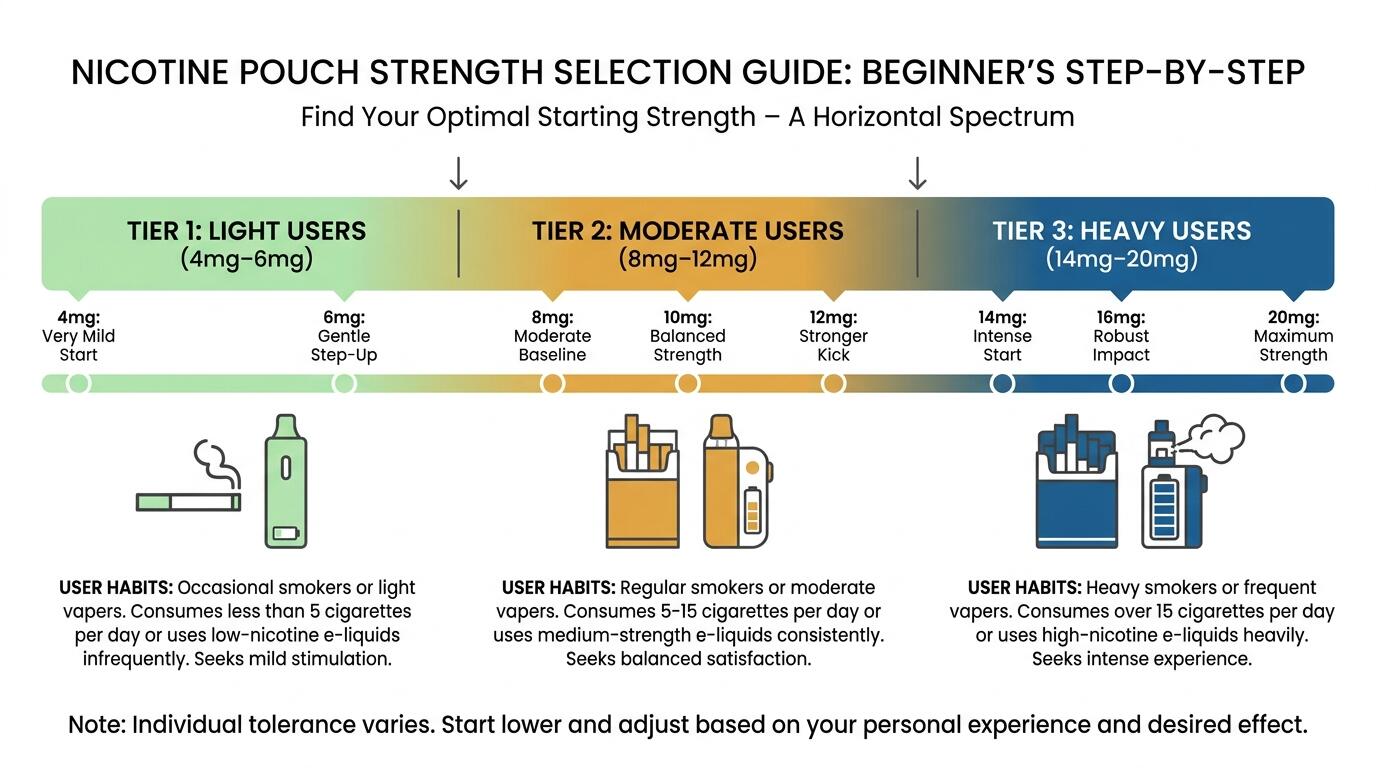
ALT: Step-by-step nicotine strength selection guide for first-time nicotine pouch users choosing between 4mg and 20mg
Trying to reduce too quickly before stabilizing is a pattern that leads to relapse back to cigarettes — a consistent finding among adults attempting to transition. Stability first, then progression.
Common Mistakes and Troubleshooting When Choosing Nicotine Strength
| Symptom | Likely Cause | How to Fix |
|---|---|---|
| Persistent cravings after a full pouch session | Starting strength is too low for your actual consumption level | Move up one strength tier and test for three to five sessions |
| Nausea, dizziness, or headache after use | Starting strength is too high, or you're absorbing too fast by using multiple pouches in quick succession | Drop to the next lower strength; space out sessions with at least 90 minutes between them |
| Strong burning or irritation in the gum area | Pouch placed incorrectly or gum sensitivity to the product | Reposition further back in the mouth; try a different flavor formulation; allow gum tissue to adjust over a few days |
| Feeling unsatisfied AND mildly unwell simultaneously | Strength mismatch in a different direction — often a flavor-strength combination issue | Try the same strength in a milder flavor and assess separately |
| Strength worked initially but feels weaker over days | Tolerance is developing, which is normal | Assess whether this is true tolerance or habit; try extending time between sessions before escalating strength |
| Returning to cigarettes within the first week | Likely started too low, or the transition period wasn't approached with enough structure | Restart with a higher starting strength and treat the first two weeks as a deliberate transition window |
Pro Tips for Better Results
Respect the absorption timeline. Unlike cigarettes, which deliver nicotine within seconds through the lungs, nicotine pouches absorb through mucosal tissue at a slower pace. Many beginners pull the pouch out within five minutes, conclude it "doesn't work," and either reach for a cigarette or immediately use a second pouch. The experience builds over fifteen to thirty minutes — patience in the early sessions prevents premature conclusions about whether a strength is right for you.
Use your craving window strategically. The best time to test a new strength is when you have a moderate, genuine craving — not at peak craving intensity and not when you're completely comfortable. Testing at moderate craving gives you the clearest read on whether the product is satisfying your needs at a given strength.
Don't conflate strength with quality. A common misconception among new users is that higher-strength pouches are inherently "better" or more premium. They're not — they're simply stronger. The best strength is the one that meets your needs with the least excess. A 4mg pouch that fully satisfies a light user is a superior experience for that person compared to a 20mg pouch that overwhelms them.
Consider the time of day. Nicotine sensitivity varies throughout the day for most people. Many users find they need a slightly higher strength first thing in the morning (after the overnight gap) and can manage with a lower or equivalent strength during the rest of the day. If your morning experience feels underwhelming at your chosen strength, try one tier up for morning use only before concluding your strength selection is wrong overall.
Flavor rotation can reset sensitivity. If you've been using the same flavor for an extended period and the experience starts to feel flat, switching to a new flavor can refresh your sensory engagement without changing the strength — worth trying before automatically escalating to a higher dose.
Frequently Asked Questions FAQ
Q1: How do I know if my nicotine strength is too high?
The clearest signs that your nicotine strength is too high include nausea, lightheadedness, headache, or a racing heartbeat following pouch use. These are signals that you're absorbing more nicotine than your body currently tolerates comfortably. If you experience any of these, remove the pouch immediately and drink water. For your next session, drop down one strength level. Nicotine sensitivity varies considerably between individuals, so the right starting strength is a personal calibration, not a universal number.
Q2: Are higher-strength nicotine pouches safe for beginners?
High-strength nicotine pouches — such as those in the 14mg to 20mg range — are formulated for experienced nicotine users with established, significant consumption patterns. They are not recommended as a starting point for beginners or light users. Starting at an inappropriate strength can cause acute nicotine discomfort and may actually discourage continued use of a healthier alternative. Begin at the strength level that honestly reflects your current consumption, and move up only if that level proves insufficient after a fair trial period.
Q3: How long does it take to find the right nicotine strength?
Most people identify a comfortable starting strength within their first one to two weeks of consistent use — typically after five to ten individual pouch sessions across a few days. The key is approaching those sessions systematically: keeping flavor and timing consistent while observing how well cravings are managed and whether any discomfort occurs. Users who keep a brief session log tend to reach a confident strength selection faster than those relying on memory alone.
Summary
Choosing your first nicotine pouch strength is one of the most important steps in building a sustainable, smoke-free nicotine routine — and it deserves genuine, honest thought rather than a random guess.
Key Takeaways:
- Your current smoking or vaping habits are the most reliable guide to your starting strength — categorize yourself honestly as a light, moderate, or heavy user before making any choice
- QOLA's range of 4mg to 20mg covers the full spectrum of user needs, from cautious first-time experimenters to experienced heavy users seeking a cleaner alternative
- Flavor and strength interact — especially with intense mint profiles, which can amplify the sensation of a given nicotine level
- Your first choice is a starting point, not a final answer — plan to refine over your first week based on structured observation
- The goal is the minimum effective strength: the lowest dose that reliably satisfies cravings, supporting a smarter and more health-conscious approach to nicotine
The next step is straightforward: reflect on your current habits, pick an honest starting tier, and commit to a structured first-week trial. Give the experience time and attention, and you'll quickly find the strength that fits your life.
Ready to find your strength? Explore the full QOLA range — with flavors and strengths designed to meet every starting point — at the QOLA website, where a cleaner, smarter nicotine alternative is ready when you are.
Sources & Further Reading
- Vape Nicotine Strengths Guide: 0mg–20mg Explained. "Vape Nicotine Strengths Guide: 0mg–20mg Explained".
https://www.google.com/goto?url=CAESugEBxCJF15u-9zutZ9dWqpOHaD7sHQbUoM_oSLbkePCAI2Xq_63TIrjMTE7XIu-a22f0Tx5MTKmoL06KUXL9Y9dqrLpRSMtH0ja4i6h66Jxn9cW4zCNFTQOUSV6Z1KE0F228xGVVe7sqxHnDbWIY3QcPrRYpice-DpknEU36W23lixEc9E7FHx1rySqgDuNrOQ1-G1d7zQ6zpxqeMgDhYlGa9eDDCEFcIlm8QNuc8w4RLVSfYU08iqWlmpo - qola.com. "QOLA Nicotine Pouches UK|No Smoking, No Vaping - Just qola".
https://qola.com/uk - Understanding Nicotine Strength Guide. "Understanding Nicotine Strength Guide".
http://vapdxb.ae/understanding-nicotine-strength/
Note: Standards and guidance around nicotine products may be updated; please check the latest official documents or consult professional advisors before making health-related decisions.
Comments
There are no comments yet.