
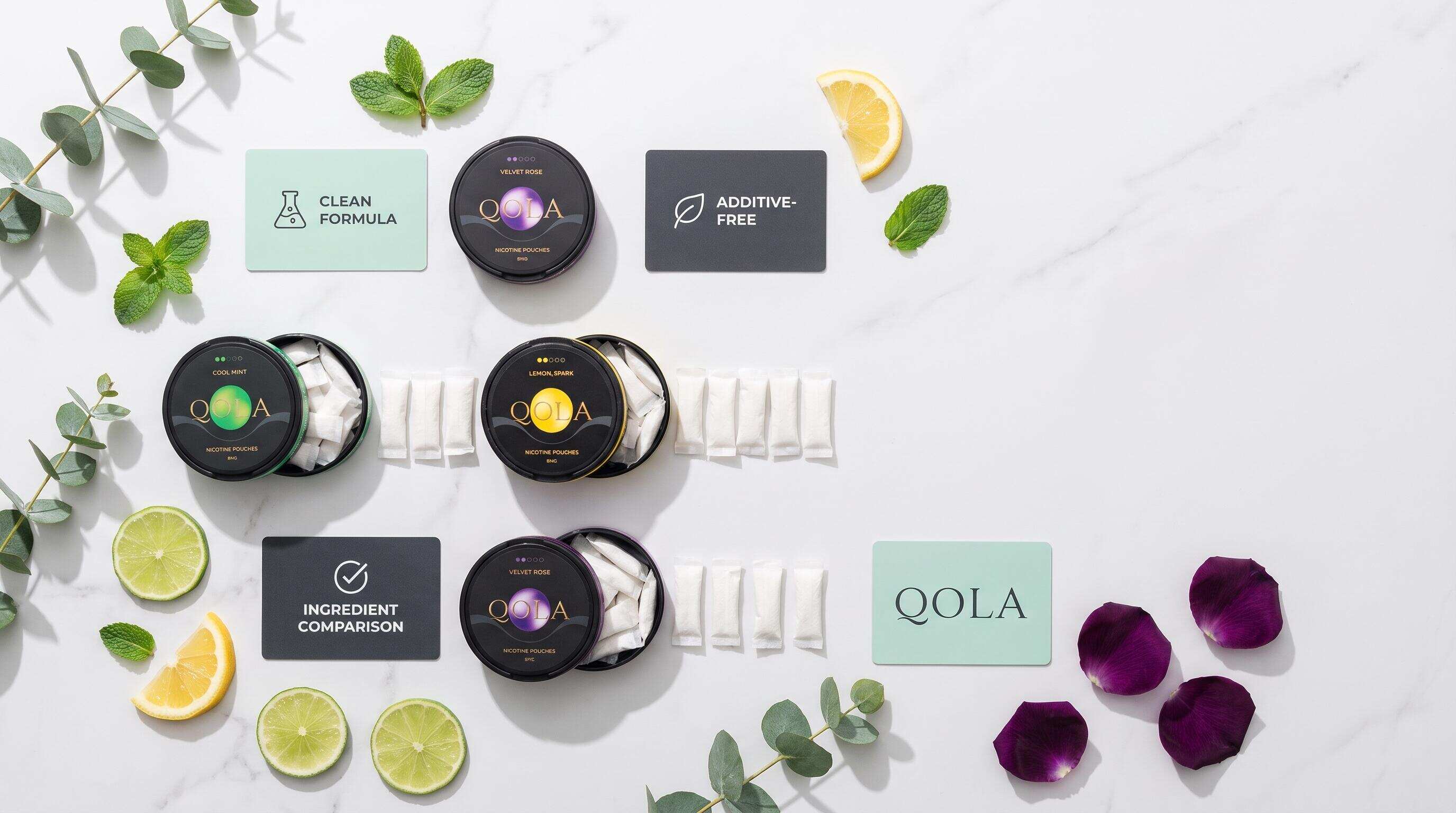
What's Actually in Your Nicotine Pouch? The Case for Cleaner Ingredients
Most people who switch to nicotine pouches do so to get away from the chemicals associated with combustion tobacco — only to discover that not every tobacco-free product is created equal. Scan the ingredient list on some pouches and you'll find a surprisingly long roster of additives, fillers, and synthetic compounds that raise the same questions consumers were trying to leave behind. The central finding of this article is straightforward: ingredient transparency and formula cleanliness are now defining factors in what separates responsible nicotine pouch brands from the rest of the market.
This matters right now because the nicotine pouch category is growing rapidly and regulatory frameworks are still catching up. That gap creates space for products of wildly varying quality to co-exist on the same shelf. For health-conscious adults who want a smarter alternative to smoking, understanding which additives are common, which are unnecessary, and which are worth scrutinizing is no longer optional — it's the foundation of an informed choice.
The Nicotine Pouch Market Today: How Ingredients Became the Differentiator
Nicotine pouches are a category of smokeless, tobacco-free products that deliver nicotine through the oral mucosa — the soft tissue inside the mouth — without combustion, vapor, or any tobacco leaf content. They consist of a small pouch, typically made from plant-based fibers, filled with a mixture of pharmaceutical-grade nicotine and various supporting ingredients. That supporting cast is where brand philosophies diverge dramatically.
The modern nicotine pouch market evolved from Scandinavian snus culture but has moved significantly beyond it. Early-generation products borrowed ingredient lists wholesale from the snus industry, including preservatives and stabilizers developed for a tobacco-based context. As the category matured and attracted a new wave of health-oriented consumers — people exiting cigarettes, cutting back on vaping, or simply seeking a cleaner daily nicotine ritual — demand for shorter, more transparent ingredient lists began to shape product development.
Today, the category spans a wide spectrum. At one end sit products that rely on lengthy additive lists to achieve palatability, shelf stability, and cost efficiency. At the other end are brands built around the idea that fewer, higher-quality ingredients produce a better experience with a reduced burden of unnecessary compounds. QOLA, as a global tobacco-free nicotine pouch brand, operates firmly in that second camp — a commitment reflected in a deliberately lean formula that excludes a documented list of additives rather than adding to them arbitrarily.
Regulatory bodies in multiple markets are beginning to pay closer attention to ingredient disclosure in nicotine pouches. The U.S. Food and Drug Administration and the UK's Medicines and Healthcare products Regulatory Agency have both issued evolving guidance on reduced-risk nicotine products. The European Union is progressively tightening rules around oral nicotine products. This regulatory momentum is pushing ingredient scrutiny from a niche concern to a mainstream expectation — which means consumers who understand additive categories now are ahead of the curve.
For a fuller foundation on how nicotine pouches work before diving into specific additives, The Complete Guide to Nicotine Pouches: A Beginner's Must-Read for 2026 provides a solid starting point.
Breaking Down the Additives: What Each Category Does and Why It Matters
Nicotine pouch formulas typically include six functional categories of ingredients. Each category serves a specific purpose — but not all purposes are equally necessary, and the choices made within each category reveal a great deal about a brand's priorities.
Nicotine Source and Carrier
Nicotine is the active ingredient, and in tobacco-free pouches it always takes the form of either synthetic nicotine or pharmaceutical-grade nicotine extracted from the tobacco plant but isolated entirely from tobacco-specific nitrosamines and other combustion byproducts. The form of nicotine matters less than its purity level and the precision of dosing — both of which affect how predictably and cleanly the product delivers its effect.
The carrier material — often microcrystalline cellulose, plant fiber, or a similar inert filler — forms the physical body of the pouch contents. High-quality carriers are food-grade and inert. Lower-quality alternatives may introduce trace compounds that affect taste or long-term tolerability.
pH Adjusters and Buffering Agents
Nicotine absorption through oral tissue is highly pH-dependent. At a more alkaline pH, a greater proportion of nicotine exists in its free-base form, which crosses mucosal membranes more efficiently. This is why virtually every nicotine pouch formula includes a pH adjuster — typically sodium carbonate, sodium bicarbonate, or related carbonates.
The concern isn't the presence of a pH adjuster; it's the quantity and the supporting compounds used alongside it. Some products layer multiple carbonate salts with additional buffering agents in ways that push pH aggressively high, which can cause irritation to oral tissue with regular use. Well-designed formulas calibrate pH carefully to optimize absorption without overloading the mouth with alkalizing compounds.
Humectants and Moisture Regulators
Humectants are compounds that retain moisture within the pouch, ensuring the product releases nicotine at a consistent rate and maintains a pleasant mouthfeel throughout use. The most common example is propylene glycol — a substance that is generally recognized as safe in food applications but has attracted scrutiny in inhalation contexts (less relevant for oral pouches, but illustrative of how ingredient risk varies by delivery route).
Other humectants include glycerol (also called glycerin), which is widely considered benign, and various polyol compounds. The cleaner-formula approach is to rely on naturally derived humectants in minimal quantities rather than stacking synthetic moisture agents.
Flavorings and Flavor Enhancers
Flavorings are among the most variable and least standardized elements of a nicotine pouch formula. Natural flavoring extracts — from mint, citrus, berry, or botanical sources — are fundamentally different from synthetic flavor compounds, though both can be labeled simply as "natural and artificial flavors" on a consumer-facing ingredient list.
The challenge with flavorings is dual: artificial flavor enhancers can introduce compounds with uncertain long-term oral exposure profiles, and certain flavor chemicals — particularly some used to intensify sweetness or create cooling sensations independently of mint — have been flagged in various regulatory contexts. A brand committed to clean formulation chooses flavoring ingredients with documented safety profiles and avoids synthetic enhancers used purely for cost or intensity.
Sweeteners
Sweeteners improve palatability, particularly for users accustomed to the slight bitterness of nicotine. The choice of sweetener is a clear signal of formulation intent. High-quality options include acesulfame potassium and sucralose, both of which are approved in food applications in most markets. Some lower-tier formulas use saccharin — an older artificial sweetener with a less clean taste profile — or rely on added sugars, which create issues with dental health during extended oral contact.
A minimalist approach to sweeteners keeps the quantity low enough to enhance without masking the natural character of the flavor profile.
Preservatives and Stabilizers
Preservatives extend shelf life and inhibit microbial growth. Common examples include sodium benzoate and potassium sorbate, both standard food-grade preservatives. Some formulas also include antioxidants such as tocopherols (vitamin E derivatives) to prevent oxidative degradation of flavorings and nicotine.
The concern with preservatives in pouches isn't acute toxicity — these are well-understood compounds at the concentrations used — but cumulative oral exposure. A consumer using pouches daily over months or years is exposed to these compounds at a frequency that differs from incidental contact through food. Brands that invest in packaging technology and manufacturing processes that reduce the need for heavy preservative loads are offering a genuinely cleaner product, not just a marketing claim.
Weighing the Evidence: Clean-Label Approaches vs. Conventional Formulas
The clean-label movement in food and consumer products is well-documented: research consistently shows that health-conscious consumers — the primary audience for nicotine pouches — place high value on recognizable, minimal ingredient lists. This preference is not merely aesthetic. Shorter ingredient lists typically correlate with fewer opportunities for unexpected interactions, greater ingredient traceability, and more rigorous quality control over individual components.
That said, there are genuine trade-offs to consider. The table below contrasts the two dominant formulation philosophies in the nicotine pouch market today.
| Perspective / Approach | Strengths | Trade-offs | Best Fit |
|---|---|---|---|
| Conventional (longer additive list) | Strong shelf stability; aggressive flavor intensity; lower unit cost | Less transparent ingredient sourcing; higher cumulative additive exposure; potential for oral irritation over time | Price-sensitive buyers; users prioritizing bold flavor over formula purity |
| Clean-label (minimal additives) | Greater ingredient transparency; reduced unnecessary additive exposure; more natural taste profile; aligns with wellness values | May require more careful packaging for shelf stability; can carry a modest premium | Health-conscious consumers; daily users concerned about long-term oral exposure; professionals seeking a discreet, refined experience |
| Hybrid (selective additives) | Balances palatability with reduced additive count; pragmatic middle ground | Requires consistent audit of which additives remain to avoid label drift | Brands transitioning their formula; consumers willing to tolerate a small number of synthetic agents for taste or stability reasons |
The evidence from consumer-facing research and product reviews in this category consistently shows that users who make an informed comparison almost universally prefer the clean-label experience once they've tried it — not because the product is dramatically different in terms of nicotine effect, but because the absence of synthetic aftertastes and oral heaviness is noticeable in direct comparison.
QOLA's approach to this question is not vague — it is documented. QOLA's Clean Label Promise: Decoding the 16 Additives We Say No To outlines precisely which compounds have been excluded from the formula and why, giving consumers the specific ingredient transparency that makes an informed comparison possible.
It's also worth noting that formulation cleanliness and nicotine effectiveness are not in tension. The strength of a nicotine pouch experience is primarily determined by nicotine concentration and pH optimization — not by the volume or complexity of supporting additives. QOLA's range spans from 4mg to 20mg nicotine concentration, covering the full spectrum from mild to strong, all within the same clean-formula framework.
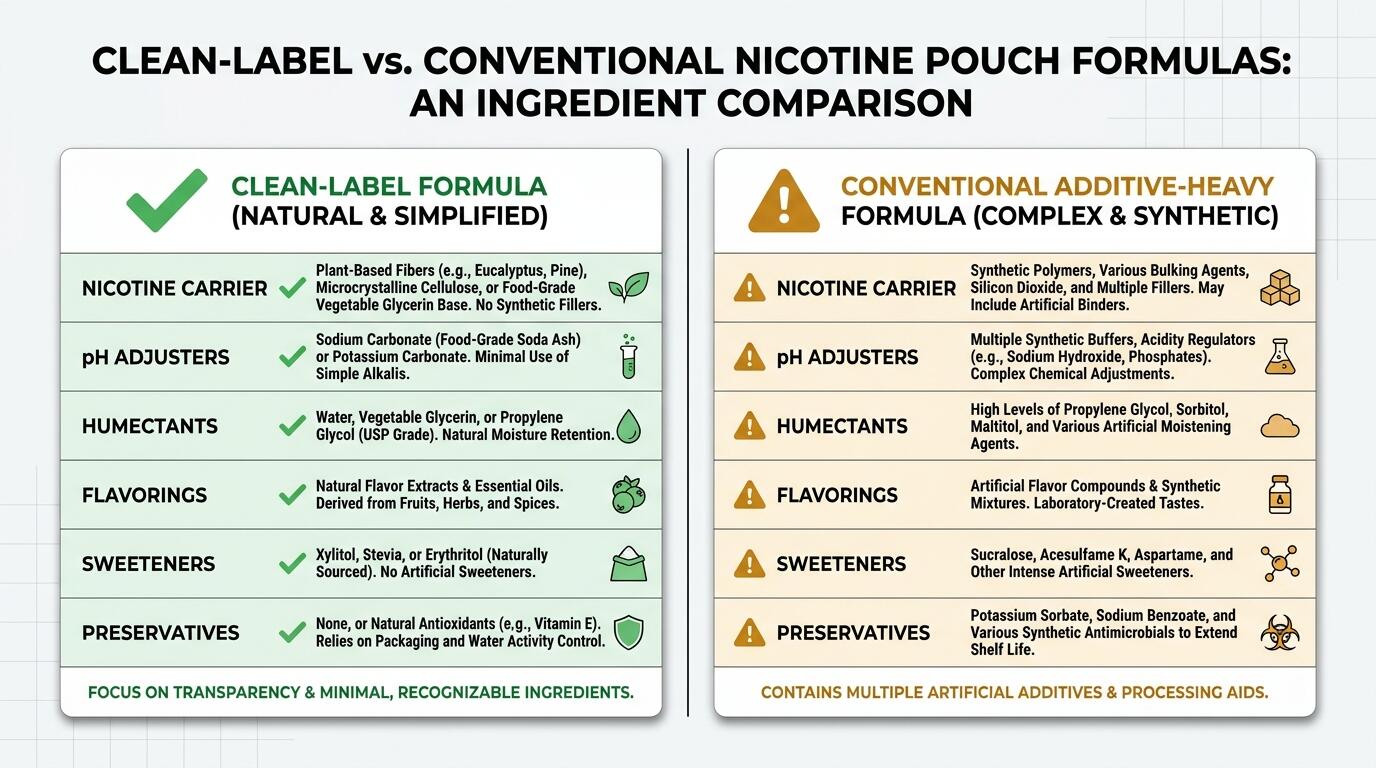
ALT: Clean-label nicotine pouch formula versus conventional additive-heavy nicotine pouch ingredients comparison chart
Where the Industry Is Heading and What It Means for Your Choices
The nicotine pouch category is at an inflection point. Regulatory pressure, growing consumer sophistication, and the entry of wellness-oriented brands are collectively pushing ingredient standards upward across the market. The question is no longer whether clean formulas will become the norm — it's how quickly that transition happens and which brands will have led it versus simply followed it.
Several converging trends are worth tracking:
- Regulatory disclosure requirements for oral nicotine products are expanding in the EU, UK, and increasingly in North American markets. Brands that have already built transparent ingredient lists will face less disruption.
- Consumer demand for ingredient traceability — knowing not just what is in a product but where those ingredients come from — is extending from the food sector into personal wellness products, including nicotine alternatives.
- The rise of health-tech informed consumers means more people are cross-referencing ingredient lists with databases, app-based trackers, and third-party reviews. Products with defensible, minimal ingredient lists will perform better under this scrutiny.
- Premium positioning in the nicotine pouch category is increasingly tied to formula quality rather than just packaging or branding. This mirrors the trajectory of the natural personal care sector, where clean credentials became a durable competitive advantage.
For consumers making choices right now, the actionable takeaway is this: treat a nicotine pouch's ingredient list as seriously as you would treat a supplement or functional food label. Ask whether each additive serves a function that couldn't be achieved with a cleaner alternative. Favor brands that name the ingredients they exclude, not just the ones they include — because that level of transparency signals a formulation philosophy, not just a marketing claim.
Frequently Asked Questions FAQ
Q1: How do I know if a nicotine pouch formula is genuinely clean, not just marketed that way?
Genuine clean-label nicotine pouches disclose their full ingredient list clearly and can explain the purpose of each ingredient. Look specifically for the absence of artificial preservatives like sodium benzoate in high concentrations, synthetic flavor enhancers, unnecessary dyes or colorants, and multiple overlapping humectants. Brands that publish a named list of excluded additives — rather than just listing what they include — demonstrate a higher level of formulation accountability. Cross-reference the ingredient list against food-grade safety databases when in doubt.
Q2: Are the additives in mainstream nicotine pouches considered dangerous?
Most additives used in mainstream nicotine pouches — including pH adjusters like sodium carbonate, humectants like glycerol, and food-grade preservatives — are approved for use in food products by major regulatory agencies including the U.S. Food and Drug Administration and the European Food Safety Authority. The issue for daily pouch users is less about acute safety and more about the cumulative oral exposure frequency, which exceeds typical food-contact scenarios. Choosing a formula that minimizes unnecessary additives reduces that cumulative burden without sacrificing nicotine delivery efficacy.
Q3: Does a cleaner formula mean a weaker nicotine experience or less flavor variety?
A cleaner formula does not mean weaker nicotine delivery or reduced flavor range. Nicotine absorption is primarily governed by nicotine concentration and pH, not by the number of supporting additives — so a well-designed clean formula can deliver nicotine just as effectively as a conventional one. Flavor variety is similarly independent of additive volume: natural flavor extracts from mint, fruit, and botanical sources produce full, recognizable taste profiles without synthetic enhancers. The clean-label approach is about removing what isn't necessary, not about sacrificing quality.
Wrapping Up
Understanding what goes into a nicotine pouch is one of the most valuable things a modern nicotine consumer can do. The additive categories covered in this article — nicotine carriers, pH adjusters, humectants, flavorings, sweeteners, and preservatives — each have legitimate roles in product formulation, but not all choices within each category are equal. Clean-label formulation is a philosophy that prioritizes transparency, minimal necessary additives, and consumer trust.
Key Takeaways:
- Nicotine pouches contain six main additive categories, each serving a specific function — but the quality and quantity of each choice varies significantly across brands.
- pH adjusters are essential for nicotine absorption efficiency; the concern is overuse or stacking of alkalizing agents, not their presence.
- Flavorings and preservatives carry the highest variability in ingredient quality; natural, food-grade options with documented safety profiles are preferable to synthetic alternatives.
- A clean formula does not compromise nicotine effectiveness or flavor variety — it simply removes compounds that serve no necessary purpose for the user.
- Ingredient transparency — including a named list of excluded additives — is the most reliable signal that a brand's clean-label claim is substantive rather than cosmetic.
The most practical next step is to compare the ingredient list of your current nicotine pouch against the framework outlined here. If the list is long, opaque, or heavy on synthetic compounds, the clean-label market has better options available right now.
Ready to experience a genuinely clean nicotine alternative? Explore the full range of tobacco-free nicotine pouches at QOLA's official website — available in multiple flavors and strengths from 4mg to 20mg, formulated without the additives you don't need, and built for a modern, smoke-free lifestyle.
Sources & Citations
- On Nicotine Pouches Ingredients: What's Inside and Are They Safe?
https://baevapor.com/on-nicotine-pouches-ingredients-whats-inside-and-are-they-safe/ - How Nicotine Pouches Are Made: A Deep Dive Into the Process.
https://snusio.com/blogs/snusio-insights/how-nicotine-pouches-are-made-a-deep-dive-into-the-process/?srsltid=AYCX9vKvCo4dIwTjyPIqSelIullXAVQNeNTiAtImMIMGnBnhW4_SHGof - qola.com. "QOLA Nicotine Pouches UK|No Smoking, No Vaping - Just qola".
https://qola.com/uk - Nicotine Pouches for a Clean Nicotine Hit: Ultimate Guide 2026.
https://zylopouch.com/nicotine-pouches-for-a-clean-nicotine-hit-ultimate-guide-2026/
Note: Standards and regulatory guidance may be updated; please check the latest official documents or consult professional advisors.
Comments
There are no comments yet.