
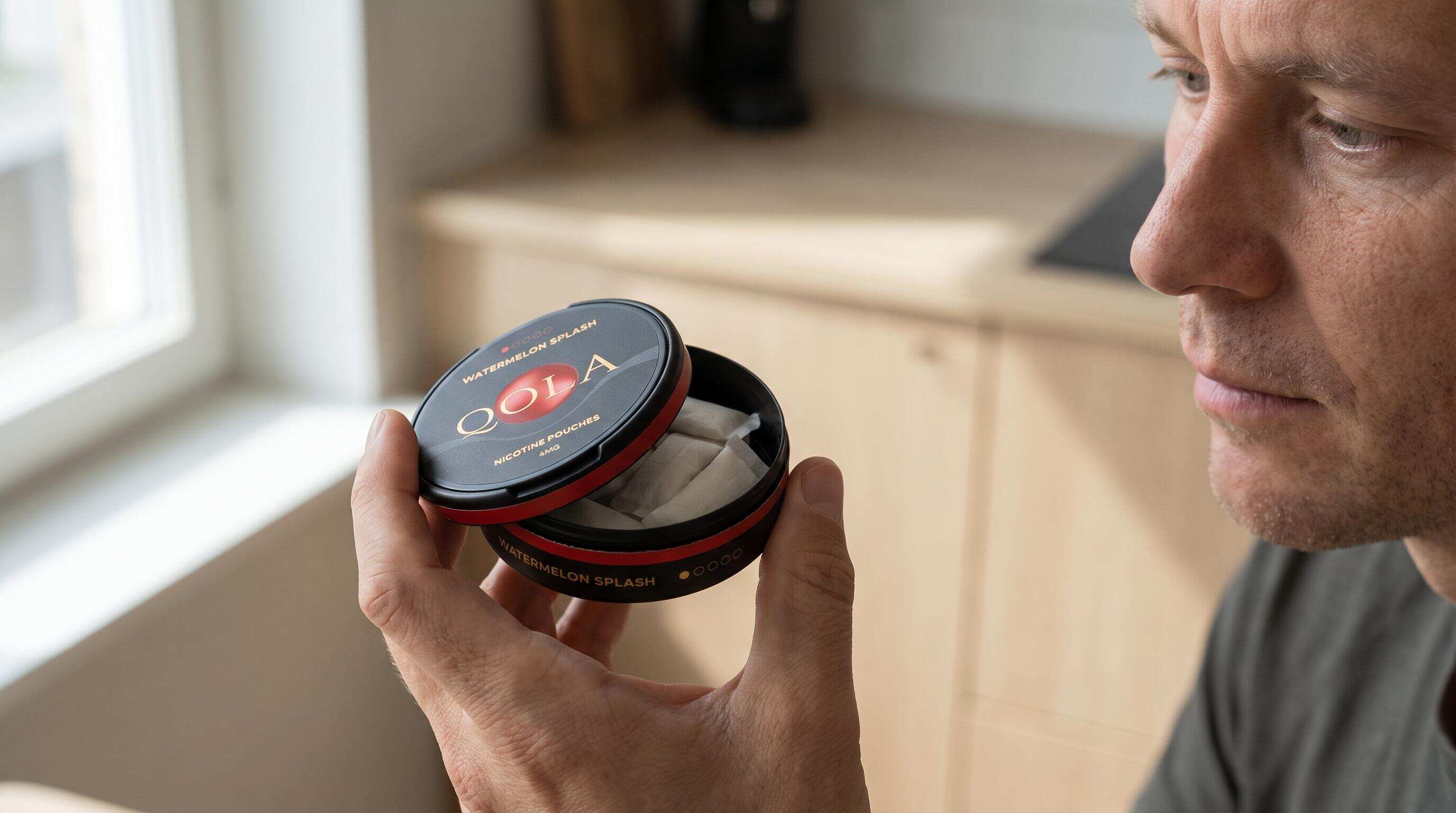
Why a 4mg Nicotine Pouch Is the Smartest Starting Point for New Users
The most common question from anyone stepping away from cigarettes or exploring tobacco-free alternatives for the first time is simple: where do I begin? The honest answer is this — a 4mg nicotine pouch is almost universally the most sensible entry point for new users, and understanding why can save you from some genuinely uncomfortable early mistakes.
A 4mg pouch delivers a measured, manageable amount of nicotine in a format that is smoke-free, vapor-free, and discreet enough to use almost anywhere. For adults who are health-conscious and lifestyle-oriented, it represents a clean break from combustion without the overwhelming hit that higher-strength options can produce in an inexperienced user. This article walks through how to choose your first pouch wisely, what to watch out for, and how to build a habit that actually works for your life — not against it.
Who This Guide Is For
Applicable Scenarios:
- Current smokers looking to transition to a cleaner, tobacco-free nicotine format and starting at a low-to-moderate daily intake
- Non-smokers or former smokers who are curious about nicotine pouches as a lifestyle product but have no established tolerance
- Professionals and urban dwellers who want a discreet, odor-free nicotine option for use in offices, public transport, or social settings
Not Applicable/Cautions:
- Individuals who are pregnant, breastfeeding, or have cardiovascular conditions — consult a healthcare professional before using any nicotine product
- Heavy, long-term smokers consuming more than a pack per day, who may find 4mg insufficient and risk under-satisfying cravings, potentially returning to cigarettes prematurely
The Rise of Tobacco-Free Nicotine and Why Strength Selection Matters
Nicotine pouches are tobacco-free oral products that deliver nicotine through the oral mucosa, without combustion, tobacco leaf, or vapor. The user places a small pouch between the upper lip and gum, and nicotine is absorbed steadily over a period of roughly 30 to 60 minutes, depending on the product and individual physiology.
The global nicotine pouch market has expanded significantly in recent years, driven by growing consumer awareness of the harms associated with tobacco combustion and an increasing preference for discreet, lifestyle-compatible alternatives. Regulatory bodies including the U.S. Food and Drug Administration and health authorities across Europe have noted the category's growth as part of a broader tobacco harm-reduction conversation.
Within this category, strength selection is not a minor detail — it is arguably the most consequential decision a first-time user makes. Choose too low, and you may not satisfy cravings, leading to frustration or returning to cigarettes. Choose too high, and you risk experiencing nausea, dizziness, or a jittery sensation that makes the experience unpleasant and potentially puts you off the entire category. A 4mg nicotine pouch threads this needle effectively for the majority of new users, offering a real but controlled nicotine experience.
For a thorough grounding in how nicotine pouches work as a product category, the complete beginner's guide to nicotine pouches is an excellent place to build foundational knowledge before diving into strength specifics.
Choosing and Using Your First 4mg Pouch: A Three-Step Start
Step 1: Assess Your Current Nicotine Baseline
Before you open a tin, take an honest inventory of your current nicotine use. Are you a light smoker consuming fewer than ten cigarettes a day? Do you currently use no nicotine products at all, or have you been off them for some time? The 4mg range is well-suited to light-to-moderate nicotine consumers. If you smoke more heavily, 4mg may still be a reasonable starting point to establish tolerance and usage habits before considering whether a step-up is warranted. This assessment takes no time at all but prevents the most common rookie error: defaulting to a stronger product because it feels like it will "work better."
Step 2: Choose a Flavor That Will Support Consistent Use
Flavor plays a larger role in long-term adoption than most first-timers anticipate. A pouch that tastes unpleasant or simply doesn't suit your palate is a pouch you won't use consistently, which undermines the whole point of making a switch. QOLA offers a range of flavors — from mint and menthol-adjacent profiles to fruit and floral options — each designed to deliver a pleasant, sustained flavor release during the pouch's active period. If you're genuinely uncertain, start with a mint-forward profile: it's the most familiar to former smokers and tends to feel clean and refreshing rather than cloying. For a more detailed breakdown of how QOLA's flavor profiles compare, the QOLA flavor lineup review provides a side-by-side analysis worth consulting.
Step 3: Use Mindfully and Observe Your Response
Place the pouch snugly under your upper lip, toward one side of the gum. You should feel a mild tingling sensation within the first few minutes — this is normal and indicates nicotine absorption is beginning. Leave the pouch in place for a minimum of 15 to 20 minutes, up to around 45 to 60 minutes depending on your preference and the product's design. Do not chew or suck on the pouch; this can accelerate nicotine release and increase the chance of irritation or nausea. After use, dispose of the pouch responsibly — most tins include a small compartment for used pouches. Pay attention to how you feel during and after. This self-observation is your most reliable guide to whether 4mg is the right level for you, or whether you need to adjust over time.
How 4mg Compares to Other Strength Options
Understanding where 4mg sits in the broader strength landscape helps new users feel confident in their choice. QOLA's range spans from 4mg up to 20mg, covering a wide spectrum of consumer needs. The table below summarizes how the main strength tiers differ across the dimensions most relevant to a new user.
| Comparison Dimension | 4mg (Starter) | 8–12mg (Mid-Range) | 16–20mg (High Strength) |
|---|---|---|---|
| Recommended user profile | Light smokers, new users, those with low nicotine tolerance | Moderate smokers, users stepping up from 4mg | Heavy, long-term smokers with established high tolerance |
| Sensation intensity | Mild, clean, manageable | Noticeable, satisfying buzz | Strong, potentially intense for new users |
| Risk of side effects for new users | Low | Moderate | High if used without prior tolerance |
| Suitability for daily discretionary use | High — easy to use in professional or social contexts | Moderate | Best reserved for experienced users with clear need |
| Transition flexibility | Excellent starting point before stepping up if needed | Good mid-step for those finding 4mg insufficient | End-stage for high-dependence users |
This comparison makes clear that the 4mg tier is designed for entry, not because it is weak, but because it is calibrated for a user whose tolerance and preferences are still being established. The full breakdown of QOLA's strength range from 4mg to 20mg provides more granular guidance for anyone considering how to map a longer-term progression.
What Makes a Quality 4mg Pouch: Reading Past the Label
Not all 4mg nicotine pouches are created equal, and this is where a surprising number of new users stumble. The stated milligram figure tells you one thing — the total nicotine content per pouch — but it tells you relatively little about the actual experience, the quality of ingredients, or the consistency of release.
The ingredient question is more important than it might first appear. Some nicotine pouch products on the market use additives — including artificial sweeteners, synthetic binders, and colorants — that have no business being in a product you're placing against your gum for extended periods. QOLA's approach to this is notably transparent: the brand maintains a clean label commitment that excludes a substantial list of additives as a matter of policy, not as a marketing afterthought. For first-time users who are health-conscious by nature, understanding what your pouch does not contain is just as meaningful as knowing what it does. The clean label ethos at QOLA's core is documented in detail and worth reading before you make any purchase decision.
Moisture and texture affect how quickly and evenly nicotine is released, and how comfortable the pouch feels under the lip. A well-constructed pouch should feel soft and unobtrusive — not scratchy, gummy, or shifting. This is a qualitative judgment you'll be able to make within your first use, but it's worth knowing in advance so you don't dismiss a momentary adjustment period as a product flaw.
Flavor consistency across the duration of use matters for user satisfaction. A pouch that delivers strong flavor for the first five minutes and then becomes bland and stale for the remaining thirty is not a quality product, regardless of its nicotine content. Look for products that describe a gradual, sustained release rather than an immediate burst.
Pouch size and discreetness is a practical concern that many guides overlook. If you plan to use nicotine pouches in professional settings — during meetings, on commutes, in social situations — the physical footprint of the pouch matters. Slim-format pouches that sit naturally under the lip without creating a visible bulge are significantly more practical for the target lifestyle this product is designed to support.
Advanced Considerations: Edge Cases and Common Misconceptions
Misconception: A higher milligram pouch will always satisfy cravings better. This is one of the most common and potentially harmful assumptions a new user can carry into their first purchase. Nicotine satisfaction is not linearly proportional to dose for a person without an established tolerance. A 20mg pouch used by someone who has never smoked or used nicotine before is not "twice as satisfying" as a 10mg option — it is very likely to cause nausea, headache, and a strongly negative experience that may put the person off the entire category. For the vast majority of new users, 4mg is not a compromise; it is an appropriately calibrated dose.
Edge case: Light use with long gaps between pouches. Some new users adopt a pattern of using one pouch in the morning and not returning to nicotine for the rest of the day. This is entirely valid and actually reflects a low-dependence usage pattern. The key risk here is not under-dosing but under-attending — forgetting to dispose of pouches properly or leaving a pouch in too long because you became distracted. Set a soft mental timer during your first few sessions to build good habits early.
Edge case: Using pouches as a bridge during travel or smoke-free environments, rather than as a primary transition tool. This is a common pattern among urban professionals. If you're using a 4mg pouch specifically in situations where you can't smoke rather than as a genuine switch, you may find that the lower strength doesn't fully bridge the gap during intense cravings. This is worth monitoring honestly, and it may indicate that a step-up to an 8mg option in those specific high-intensity moments could be appropriate — without abandoning 4mg as your everyday baseline.
Clarifying the "tobacco-free" claim. A tobacco-free nicotine pouch contains no tobacco leaf, tobacco stems, or reconstituted tobacco materials. The nicotine it contains is typically derived via synthesis or extracted in a form that removes it from tobacco plant material. This distinction matters to health-conscious consumers because many of the compounds associated with tobacco-related health concerns are associated with combustion and tobacco leaf itself, not with nicotine in isolation. This does not make nicotine risk-free — it is an addictive substance and carries its own considerations — but the tobacco-free designation is substantive, not cosmetic.

ALT: Professional using a discreet 4mg tobacco-free nicotine pouch during daily commute, smoke-free nicotine alternative
Frequently Asked Questions
Q1: How long should I leave a 4mg nicotine pouch in place for best results?
Most users get the best experience by keeping a 4mg pouch in place for between 20 and 45 minutes. Removing it too early — before the 15-minute mark — means the nicotine has not had sufficient time to absorb fully through the oral mucosa. Leaving it beyond 60 minutes generally offers diminishing returns and may increase the chance of mild gum irritation. For first-time users, the middle of this range — around 30 minutes — is a sensible and comfortable starting point to gauge your personal response.
Q2: Is 4mg strong enough to replace cigarette cravings effectively?
For light-to-moderate smokers — typically those consuming up to around ten cigarettes per day — a 4mg nicotine pouch is generally sufficient to manage cravings, particularly during the early stages of a switch. Heavier smokers may find 4mg underwhelming at first, though some find that the novelty of a new delivery format temporarily compensates. The key variable is individual physiology and tolerance. If 4mg consistently fails to take the edge off cravings after a week of regular use, stepping up to 8mg is a reasonable and well-supported next move, as outlined in QOLA's strength range guidance.
Q3: How often can I use a 4mg nicotine pouch throughout the day?
There is no universal rule, but as a general framework, most experienced users of 4mg pouches settle into a pattern of between two and five pouches per day, spaced several hours apart. Using pouches more frequently than your body signals a need — for instance, out of boredom or habit rather than genuine craving — can gradually build tolerance and lead to unnecessary escalation. For first-time users, we consistently recommend starting with one pouch and observing how long it takes for a genuine craving to return before reaching for another.
Key Takeaways
- A 4mg nicotine pouch is the right starting strength for the vast majority of new users — not because it is the weakest option, but because it is calibrated to a beginner's tolerance and reduces the risk of an unpleasant first experience.
- Flavor selection matters more than many new users expect; choosing a profile you genuinely enjoy supports consistent adoption and makes the transition from cigarettes more sustainable.
- Reading past the milligram label to understand ingredient quality, pouch construction, and clean-label commitments separates genuinely good products from those that merely market themselves as modern.
- Common mistakes — choosing too high a strength, using pouches more frequently than needed, or neglecting proper pouch placement and timing — are all avoidable with a small amount of upfront knowledge.
- Your first week of use is primarily observational: pay attention to how your body responds, and adjust strength or frequency based on real signals rather than assumptions.
Your next step is straightforward: explore a 4mg option from a brand whose ingredient standards and flavor range you trust, start with one flavor you're genuinely drawn to, and give yourself at least a week of honest use before drawing conclusions.
Ready to experience nicotine on your own terms? Explore QOLA's full range of tobacco-free nicotine pouches — built around clean ingredients, diverse flavors, and strengths from 4mg to 20mg — at the QOLA website, and take your first step toward a cleaner, smarter nicotine alternative.
Sources & Further Reading
- qola.com. "QOLA Nicotine Pouches UK|No Smoking, No Vaping - Just qola".
https://qola.com/uk - U.S. Food and Drug Administration. "Nicotine and Tobacco Products — Regulatory Overview".
https://www.fda.gov - World Health Organization. "Tobacco — Health Topics and Harm Reduction Resources".
https://www.who.int - National Institutes of Health — National Institute on Drug Abuse. "Nicotine — Research and Consumer Information".
https://www.nih.gov - Public Health England (now UK Health Security Agency). "Nicotine Alternatives and Tobacco Harm Reduction".
https://www.gov.uk
Note: Standards and regulatory guidance may be updated; please check the latest official documents or consult a qualified healthcare professional for advice specific to your circumstances.

Comments
There are no comments yet.