
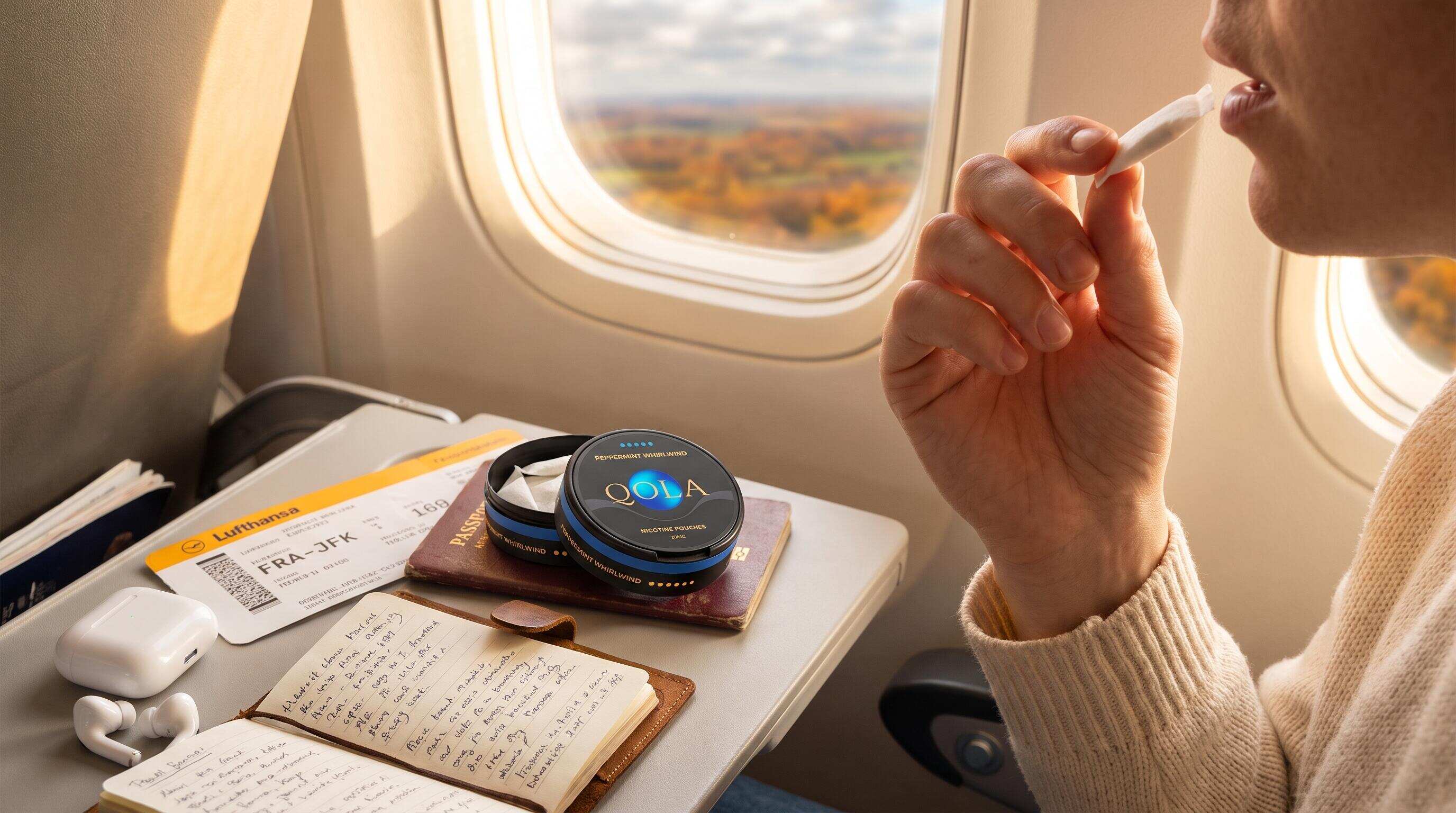
Rethinking Nicotine on the Move: Why Your Travel Routine Deserves a Smarter Option
Picture this: you're at an international airport, boarding pass in hand, with a three-hour flight ahead and a layover after that. The urge for nicotine hits — and suddenly you're calculating whether you have time to find a designated smoking area, wondering if vaping is permitted in the lounge, and dreading the stale-smoke smell you'll carry back onto the plane. This is a scenario that countless adult nicotine users navigate every week, and it represents one of the most underappreciated friction points in modern travel.
The central finding of this article is straightforward: tobacco-free nicotine pouches are uniquely positioned to eliminate that friction entirely. As travel volumes recover and grow globally, the case for switching to a smoke-free, vapor-free, and odor-free nicotine format has never been more compelling — or more practically grounded. This is not simply a matter of convenience. It is about reclaiming autonomy over how, when, and where you satisfy your nicotine needs without inconveniencing yourself or the people around you.
The State of Nicotine and Travel: A Landscape That Has Shifted Dramatically
Smoking restrictions on commercial flights have been standard across most of the world for decades, but the broader regulatory environment for nicotine products in transit spaces has evolved considerably in recent years. Airports, train stations, high-speed rail networks, and even hotel lobbies have progressively tightened their policies on smoking and vaping, extending designated zones further from terminals or eliminating them altogether in some jurisdictions.
At the same time, the nicotine product market itself has undergone a quiet revolution. Nicotine pouches — small, tobacco-leaf-free pouches placed between the gum and upper lip — represent one of the fastest-growing categories in the alternative nicotine space. Unlike cigarettes, they produce no smoke. Unlike vapes, they produce no vapor. Unlike traditional oral tobacco such as snus, they contain no actual tobacco leaf. The active ingredient is pharmaceutical-grade nicotine, delivered through a moisture-activated mechanism that is clean, controlled, and discreet.
The appeal is easy to understand in a travel context. Travelers are increasingly sophisticated consumers who want their nicotine habits to fit neatly into their lives — not the other way around. A growing number of health-conscious adults are actively seeking alternatives that don't require them to leave a gate area, step outside a train station in the rain, or apologize to fellow passengers for a lingering smell. Consumer research across multiple markets consistently shows that discretion, convenience, and cleanliness rank among the top priorities for adults who are transitioning away from combustible tobacco.
It is also worth noting that nicotine pouches travel well in a purely logistical sense. They are compact, require no charging cables, produce no liquid that could trigger aviation liquid restrictions, and sit comfortably in a shirt pocket or carry-on bag. The format is as travel-ready as a product can be.
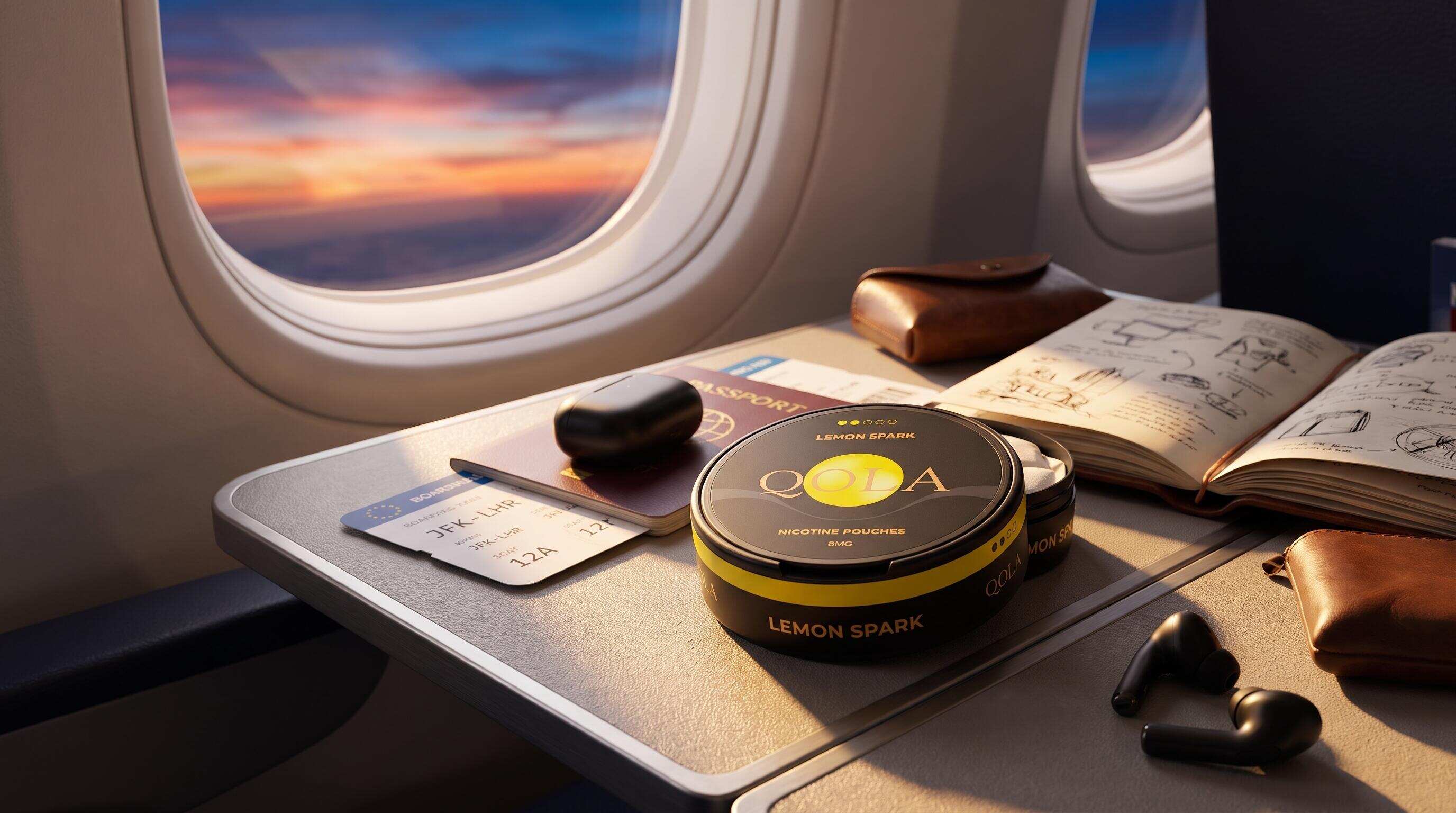
ALT: Tobacco-free nicotine pouches beside a passport and boarding pass, illustrating a discreet and travel-friendly smoke-free nicotine option for flights and trains this season
Why Nicotine Pouches Are Structurally Built for Transit Environments
Nicotine pouches work so well in travel settings because their design properties directly map onto the constraints that transit environments impose. Understanding the mechanism makes it easier to appreciate why no other nicotine format comes close for in-journey use.
No Combustion, No Vapor, No Odor
The most fundamental advantage is the complete absence of combustion or vaporization. When a nicotine pouch is placed between the gum and lip, the moisture in the mouth activates the nicotine and flavor compounds within the pouch material. The result is a steady, controlled release of nicotine that continues over a sustained period — with absolutely no smoke, no aerosol, and no detectable odor to those seated nearby. On a packed economy flight or a crowded commuter train, this matters enormously. Fellow passengers are unaffected, and the user avoids the social awkwardness that cigarette or vaping use almost always generates in enclosed spaces.
Hands-Free and Invisible
Discreet use is another structural feature that makes nicotine pouches ideal for transit. Once placed, a pouch is entirely hands-free and virtually invisible when in use. There is no device to hold, no lighter to fumble with, and no cloud of vapor to explain. A user can be in the middle of a business conversation, watching a film on their tablet, or simply resting their eyes — and the nicotine experience continues without interrupting any of it. For professionals traveling on business, this level of discretion is not a minor benefit; it is a genuine lifestyle upgrade.
TSA, Security Checks, and Cross-Border Carry
Nicotine pouches are straightforward to carry through airport security in most countries. Because they contain no liquid, they sidestep the aviation liquid restrictions that affect e-cigarettes and vaping liquids. Because they are tobacco-leaf-free, they also navigate a different regulatory category than cigarettes or traditional snus in many jurisdictions — though it remains the user's responsibility to check the specific import regulations of their destination country before travel. The compact, resealable packaging common to most premium nicotine pouch brands takes up minimal space in a carry-on and passes through X-ray screening without issue.
Flexible Strength Options for Long-Haul Journeys
For users managing nicotine intake across a long-haul flight or an extended train journey, the ability to choose from multiple strength options is genuinely valuable. QOLA, for example, offers its tobacco-free nicotine pouches across a range from 4mg to 20mg per pouch, giving users the precision to match their nicotine needs to the duration and context of their journey. Someone on a short domestic flight might prefer a milder 4mg option; a traveler on a transatlantic route might find a mid-range strength better suited to managing cravings over many hours. This flexibility, explored in depth in QOLA's full strength range breakdown, is something no single-strength product can replicate.
Comparing Nicotine Options in Transit: Evidence and Trade-Offs
The case for nicotine pouches in travel contexts becomes even clearer when compared directly against competing formats. The table below draws on documented characteristics of each product type, with trade-offs assessed from the perspective of a traveler in an airport or on a train.
| Nicotine Format | Permitted In-Flight / On-Train | Odor Impact | Security Screening | Discretion Level | Best Fit For |
|---|---|---|---|---|---|
| Cigarettes | Never permitted | High — lingers on clothing and in spaces | No issue to carry; use severely restricted | Very low | Outdoor designated areas only |
| Vaping / E-cigarettes | Generally not permitted to use | Moderate — vapor dissipates but is visible | Devices and liquids may face restrictions | Low — visible clouds | Limited outdoor zones; not suitable for enclosed transit |
| Traditional snus / oral tobacco | Use often permitted; regulations vary | Low to moderate — some odor from tobacco leaf | Generally unrestricted | Moderate | Markets where snus is culturally accepted |
| Tobacco-free nicotine pouches | Use generally unrestricted in seat | None — zero odor | Unrestricted; no liquids, no devices | High — invisible in use | All transit environments, including in-flight use |
The pattern across the industry is consistent, as noted by travel and nicotine product communities: nicotine pouches are the only mainstream format that can realistically be used in-seat on a plane or in a train carriage without affecting other passengers or violating operational policies. That functional advantage is not marginal — it is structural.
It is also worth addressing a nuance that experienced nicotine users often raise: the experience quality of pouches compared to combustibles. In our observation of how consumers engage with tobacco-free alternatives, the initial adjustment period is real. Users accustomed to the rapid nicotine spike of a cigarette will find that pouches deliver nicotine more gradually. However, this slower delivery is well-matched to the extended, sedentary nature of flight or train travel, where the goal is sustained comfort rather than a quick hit. For many users, this is actually preferable in transit settings once the adjustment is made.
For those new to the category, the complete beginner's guide to nicotine pouches provides a thorough grounding in how the format works, what to expect, and how to choose a starting strength.
Where This Is Heading: The Travel Nicotine Experience in the Near Future
Tobacco-free nicotine pouches are not merely a workaround for travel restrictions — they represent a broader directional shift in how modern adults consume nicotine. The convergence of tightening public-space tobacco policies, growing health consciousness among adult nicotine users, and improving product quality in the smokeless nicotine category is creating durable momentum behind this format.
Airports and rail operators are unlikely to relax smoking or vaping restrictions. If anything, the trajectory across major transit hubs globally points toward further consolidation of smoke-free and vapor-free environments. This means that the utility of nicotine pouches in travel contexts will only increase over time, not diminish. Users who establish the habit of traveling with pouches now are positioning themselves ahead of a curve that is bending firmly in one direction.
For the health-conscious traveler, there are additional reasons to consider the shift. Eliminating combustion from your nicotine routine removes exposure to the combustion byproducts that represent the most documented health risks associated with smoking. While nicotine itself is not risk-free — no responsible brand or health authority would claim otherwise — the removal of tobacco leaf and combustion is a meaningful harm-reduction step that is increasingly acknowledged in public health conversations. Organizations including the U.S. Food and Drug Administration have frameworks for evaluating tobacco-free nicotine products as part of a broader regulatory approach to harm reduction.
Three takeaways stand out for any frequent traveler currently using cigarettes or vaping products:
- The practical barriers to in-journey nicotine satisfaction are essentially eliminated when you switch to a pouch format — no more searching for smoking zones, no more anxiety about vaping policies.
- Carrying multiple strength options means you can calibrate your experience to the journey, treating a short domestic flight differently from a twelve-hour transatlantic haul.
- The flavor variety available in modern nicotine pouch ranges — from mint and menthol to fruit and floral profiles — means that the in-pouch experience is genuinely pleasant, not a compromise.
Frequently Asked Questions FAQ
Q1: How do nicotine pouches work during a flight, and are they allowed on planes?
Nicotine pouches are tobacco-free, smoke-free, and vapor-free oral nicotine products placed between the gum and upper lip. Because they produce no smoke or aerosol, they are generally not subject to the in-flight smoking and vaping bans that apply to cigarettes and e-cigarettes. Most major airlines have no specific prohibition on the discreet, in-seat use of nicotine pouches, though travelers should always confirm current policies with their specific carrier and check destination country regulations before travel.
Q2: Are nicotine pouches genuinely odor-free in a small, enclosed space like an airplane cabin?
Tobacco-free nicotine pouches produce no detectable odor during use, which makes them distinct from cigarettes, traditional snus, and even some vaping products that can leave a noticeable smell. The pouch sits inside the mouth and releases nicotine without any combustion or vaporization — the process that generates odor in other formats. For travelers in close proximity to others, this means that in-seat use is entirely unobtrusive to fellow passengers, a quality that makes nicotine pouches uniquely suited to enclosed transit environments.
Q3: How long does a nicotine pouch last during a train or flight journey, and how many should I pack?
A single nicotine pouch typically delivers a satisfying experience over an extended period — generally in the range of thirty minutes to an hour, depending on the brand, strength, and individual physiology. For a standard domestic flight or a medium-distance train journey, two to three pouches would typically suffice for most users. For long-haul international flights of eight hours or more, packing a full can ensures you are covered without relying on purchasing options at your destination. QOLA's resealable cans are compact and carry-on-friendly.
Final Thoughts
The case for nicotine pouches as the ideal travel companion is built on three pillars that hold up under scrutiny: unmatched discretion in enclosed environments, complete freedom from the combustion-based restrictions that govern airports and rail networks, and the flexibility of multiple strengths and flavors to match a journey's demands.
For adult nicotine users who are still navigating transit on cigarettes or vaping products, the friction is real and growing — stricter policies, shrinking designated zones, and the social cost of odor-generating habits in shared spaces. Nicotine pouches resolve all of that in a single format shift. The transition does require some adjustment, particularly for users accustomed to rapid nicotine delivery, but the payoff in terms of journey comfort and social ease is substantial.
The practical next step is to identify the right strength for your usage pattern and experiment with flavors before committing to a travel-ready selection. Starting with a range sampler — if available from your chosen brand — allows you to calibrate before a long trip rather than during one. For those with safety and usage questions about the category before making the switch, it is worth reading through what current evidence says about tobacco-free pouches, including resources such as what every user should know about nicotine pouch safety.
If you are ready to travel smarter this season — without smoke, without vapor, and without compromise — the starting point is choosing the right product.
Explore QOLA's full range of tobacco-free nicotine pouches in diverse flavors and strengths, from 4mg through to 20mg, all designed for the kind of clean, discreet experience that fits naturally into a modern travel lifestyle. Visit the QOLA website to find the right pouch for your next journey.
Sources & Further Reading
- Pouch Daddy. "Which Nicotine Pouches Are Best for Travel?"
https://pouchdaddy.com/blogs/news/which-nicotine-pouches-are-best-for-travel?srsltid=AYCX9vKVj4W-M48PU0cQRUsqtqkOdjcvCVuZTwbDpQoizUb6U4oFuWx5 - qola.com. "QOLA Nicotine Pouches UK|No Smoking, No Vaping - Just qola".
https://qola.com/uk - Google/Zyn. "Can You Use Zyn on a Plane?"
https://www.google.com/goto?url=CAEStgEBxCJF1zSJLqGsLZTBUGeMCV46Gxltk-NQ-CSvt_OFzQ4pDwWpUcvpzqG1E1Isc_xw3vkcplOyY8-u8NG1BqydMTbwKKEBeQL-B4QvJ30ea7ME9KYHCGeHcXLq6j5CMLXUJoreXVWOh8o_qxy-WmxCyAOVTL1Pgvkic3JMjyPh1L8BUHEa39V8O0yGWsUEBoYZs3toIMISAfVWo1MEmXtdqRsSVj6a6FGV_KkOnGcYcXaWGO5EsQ - Snap Pouch. "Traveling with Nicotine Pouches: What You Should Know."
https://www.snappouch.com/en/blogs/traveling-with-nicotine-pouches-what-you-should-know?srsltid=AYCX9vJYW9D3klyhSeV3mt3fMg4V9llhoFoq8NDcl43-JsNdbTDGKxOL
Note: Standards and regulations may be updated; please check the latest official documents or consult professional advisors before traveling.


Comments
There are no comments yet.