

The Science Behind Every Pouch: How Nicotine Reaches Your System
Key Conclusion: Nicotine pouches deliver nicotine through the oral mucosa — the soft tissue lining the inside of the mouth — without combustion, vapor, or tobacco leaf. When a pouch is placed between the gum and lip, nicotine dissolves from the pouch matrix into saliva and is absorbed directly into the bloodstream through thin mucosal membranes. This mechanism is clean, predictable, and tobacco-free, making it a meaningfully different experience from smoking or vaping, and one that is increasingly relevant to health-conscious adults seeking a smarter alternative.
There is a moment, familiar to anyone who has made the switch from cigarettes to nicotine pouches, when you realize something is different — not just in what you're doing, but in how the experience unfolds. No flame. No vapor trail. No lingering odor on your jacket. Just a subtle, steady release that happens quietly, almost imperceptibly, beneath the surface. Understanding exactly what is happening in those minutes — the chemistry, the biology, the pathway from pouch to bloodstream — is not just intellectually satisfying. It is also practically useful. When you understand the mechanism, you can make smarter decisions about which strength to choose, how long to use a pouch, and what to expect from your body's response.
From Cigarettes to Pouches: Where the Market Stands Today
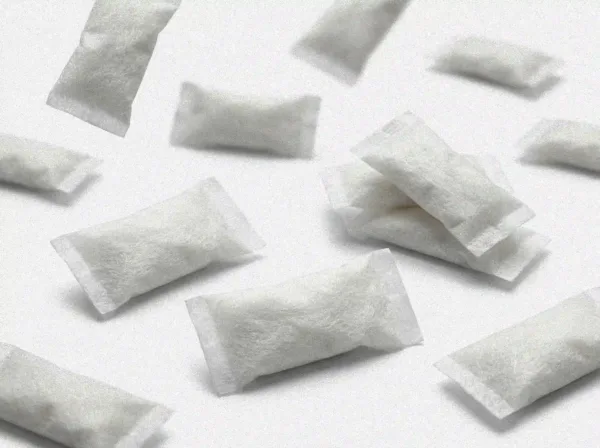
Nicotine pouches are tobacco-free oral nicotine products that have emerged as one of the fastest-growing segments in the broader nicotine alternatives market. Unlike traditional smokeless tobacco products — snus, chewing tobacco, dip — nicotine pouches contain no tobacco leaf whatsoever. They are small, pre-portioned sachets typically containing nicotine (derived from tobacco plants or synthesized), a plant-fiber base, pH-regulating agents, flavorings, and moisture-balancing ingredients.
The global interest in tobacco-free nicotine alternatives has expanded considerably in recent years, driven by a combination of public health awareness, shifting social norms around smoking, and a growing population of adult nicotine users who want the experience without the associated risks of combustion. Regulatory bodies in multiple jurisdictions — including the U.S. Food and Drug Administration and health authorities across the European Union — have been actively reviewing and updating frameworks around oral nicotine products, reflecting their increasing market presence.
What makes nicotine pouches particularly interesting from both a consumer and a scientific standpoint is the delivery mechanism itself. Smoking delivers nicotine almost instantly to the lungs and then into arterial blood, producing a sharp, rapid spike. Nicotine replacement therapies like patches deliver nicotine slowly and transdermally, often taking an hour or more to reach meaningful blood levels. Nicotine pouches occupy a middle ground: they begin releasing nicotine relatively quickly, but the rate is modulated, sustained, and delivered through a pathway that requires no inhalation whatsoever.
In our work at QOLA developing and refining tobacco-free nicotine pouches, we consistently observe that users who understand this delivery curve adapt more quickly to the experience and make more informed choices about strength and usage duration. The growing body of consumer education around oral nicotine products reflects a market that is maturing — and an audience that is asking better questions than ever before.
For those just beginning to explore this category, resources like The Complete Guide to Nicotine Pouches provide foundational context that complements the mechanistic detail explored here.
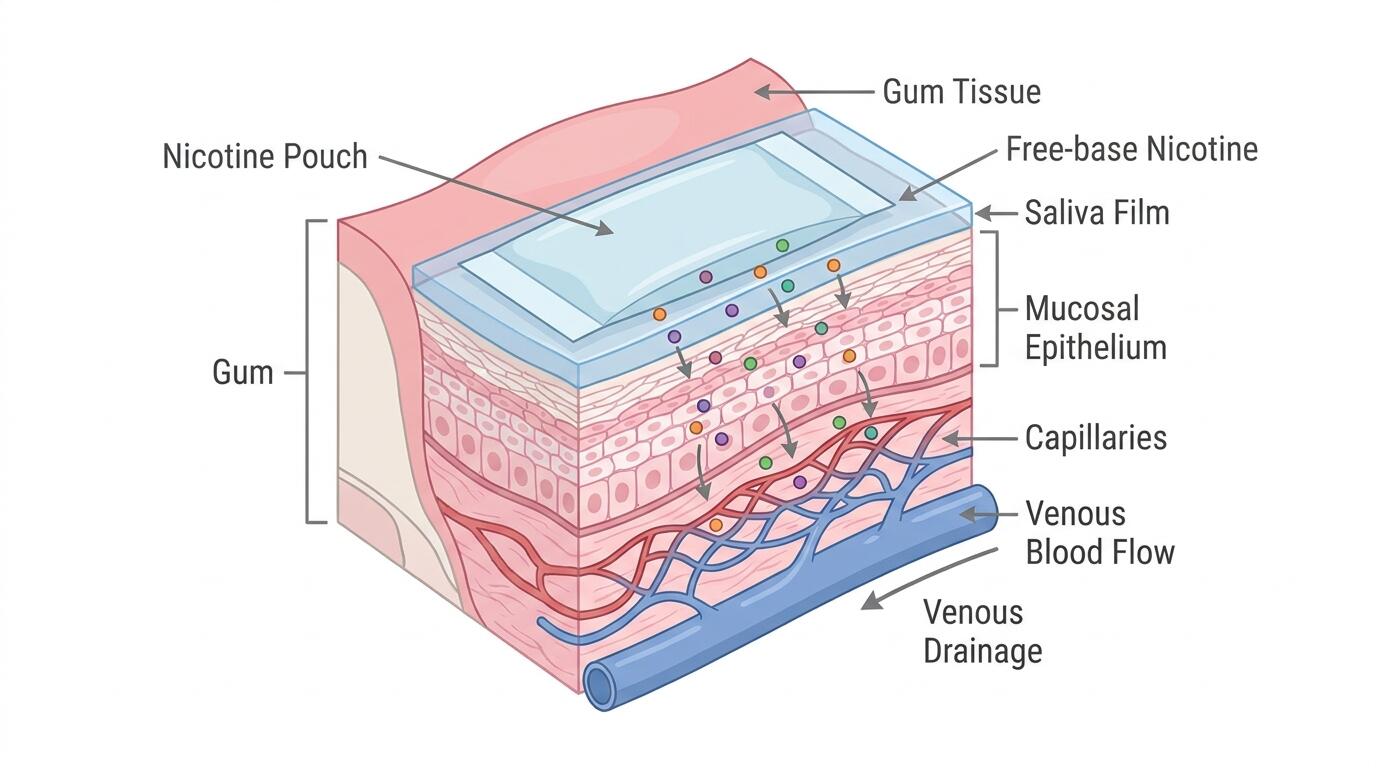
ALT: Cross-section diagram of oral mucosa showing nicotine absorption from a tobacco-free pouch placed between lip and gum
The Mechanism of Absorption: What Happens Inside Your Mouth
Nicotine absorption from a pouch begins the moment it makes contact with the mucosal tissue of the mouth, and understanding this process clarifies why pouches feel different from other nicotine products — and why that difference matters.
Step One: Placement and Initial Contact
The standard placement for a nicotine pouch is in the upper gum area, tucked between the gum and the inner lip. This location is chosen deliberately. The oral mucosa — the mucous membrane lining the inside of the mouth — is richly supplied with blood vessels and capillaries that sit very close to the surface. This vascular density is what makes oral absorption not only possible but efficient.
When the pouch is placed, moisture from saliva begins to interact with the pouch matrix immediately. This moistening process is the catalyst for nicotine release. The pouch is designed to maintain structural integrity while allowing fluid exchange — think of it as a controlled diffusion system rather than something that simply leaks.
Step Two: Dissolution and pH Regulation
Nicotine exists in two chemical forms: ionized (protonated) and un-ionized (free-base). Only the un-ionized, free-base form of nicotine crosses biological membranes efficiently. This is why the pH of a nicotine pouch formulation is critically important. Pouch manufacturers — including QOLA — engineer their products at a slightly alkaline pH to maximize the proportion of free-base nicotine available for absorption.
As saliva contacts the pouch and nicotine begins to dissolve into the fluid, the pH-modifying agents in the pouch matrix (commonly food-grade buffering compounds) shift the local chemical environment to favor this un-ionized state. This is a nuanced piece of formulation science: get the pH too low and absorption is sluggish; get it too high and the experience can feel harsh on the tissue.
Step Three: Transmucosal Absorption
Once free-base nicotine is dissolved in the thin film of fluid sitting against the mucosal surface, it diffuses passively across the mucosal epithelium — the cellular lining of the mouth — and into the capillary network just beneath it. This process is called transmucosal absorption. It is passive diffusion, meaning it follows a concentration gradient: nicotine moves from an area of high concentration (the mucosal fluid) to an area of lower concentration (the capillary blood).
From the capillaries, nicotine enters venous blood and travels to the heart, then into systemic circulation. Unlike inhaled nicotine, which travels from the lungs directly into the arterial bloodstream and reaches the brain within seconds, oral mucosal absorption is somewhat slower — typically reaching meaningful blood nicotine levels within a few minutes of placement, with levels continuing to rise and then plateau over the course of the session.
Step Four: Duration and the Sustained Release Profile
One of the distinctive characteristics of nicotine pouches is their sustained release profile. Rather than delivering a sharp spike followed by a rapid decline — the pattern associated with smoking — pouches provide a more gradual rise and a longer, steadier period of elevated nicotine levels. This profile is partly by design and partly a function of the mucosal absorption pathway.
QOLA pouches, for example, are formulated to deliver an experience lasting in the range of 40 to 60 minutes, allowing users to integrate nicotine into their routine without the interruptions demanded by smoking. The release duration is influenced by pouch composition, moisture content, the user's saliva production rate, and placement consistency.
The Role of Nicotine Strength
Nicotine strength — expressed in milligrams per pouch — is the key variable that determines how much nicotine is available for absorption during a session. QOLA's range spans from 4mg to 20mg per pouch, covering the full spectrum from light use to experienced users who have previously maintained higher daily nicotine intake. A lower-strength pouch (4mg–6mg) delivers a gentler, more introductory experience with a shallower absorption curve; higher-strength options (12mg–20mg) provide a more pronounced and sustained nicotine level, appropriate for users transitioning from heavier smoking habits. For a detailed breakdown of how to navigate these options, QOLA's full strength range guide is a useful reference.
Understanding this relationship between strength and absorption helps users calibrate their experience rather than relying on guesswork — a pattern we consistently see lead to more satisfying outcomes and fewer instances of using pouches at mismatched strengths.
Comparing Nicotine Delivery Methods: Evidence and Trade-Offs
Nicotine pouches do not exist in isolation — they sit within a broader landscape of nicotine delivery options, each with a distinct absorption profile, risk profile, and user experience. The table below outlines the key differences across the most common approaches.
| Perspective / Approach | Strengths | Trade-offs | Best Fit |
|---|---|---|---|
| Combustible cigarettes | Very rapid nicotine delivery; well-understood ritual | Combustion byproducts; significant respiratory and cardiovascular risk; odor; no-smoke restrictions | Former baseline for many users; not recommended as a continuing choice |
| Nicotine patches (transdermal) | Consistent, slow-release delivery; hands-free; widely available | Slow onset (60+ minutes); no behavioral ritual; skin sensitivity in some users | Cessation support; users who want background nicotine without oral engagement |
| Nicotine gum / lozenges | Flexible dosing; widely available; no combustion | Requires active chewing or dissolving; variable absorption depending on technique; not discreet in all settings | Users comfortable with oral activity; cessation contexts |
| Vaping / e-cigarettes | Faster onset than pouches; mimics smoking ritual; large flavor variety | Inhalation required; vapor visible; regulatory uncertainty; lung tissue exposure | Smokers seeking ritual similarity; not suitable where vaping is restricted |
| Nicotine pouches (e.g., QOLA) | Tobacco-free; smoke-free; vapor-free; odor-free; discreet; sustained release; multiple strengths and flavors | No rapid spike (slower than smoking); some users need adjustment period; oral tissue awareness initially | Health-conscious adults, professionals, urban users, those in smoke-free environments |
The evidence picture around nicotine pouches is still developing — this is a relatively young product category and long-term population-level data is not yet as mature as it is for patches or gum. However, the mechanistic case for oral mucosal delivery as a cleaner pathway than inhalation is well-supported by basic pharmacological science. Nicotine absorbed through the oral mucosa does not require combustion and does not expose the respiratory tract to pyrolysis products or particulate matter.
QOLA's formulation philosophy also takes the composition question seriously. The brand's commitment to ingredient transparency — specifically, the deliberate exclusion of certain additives — reflects a broader understanding that what is not in the pouch matters as much as what is. This approach to clean-label formulation is increasingly relevant to consumers who read ingredient lists as carefully as they read product reviews.
From a harm reduction standpoint, public health researchers and regulatory bodies including the U.S. FDA have begun distinguishing between products based on their delivery mechanism — recognizing that eliminating combustion removes the primary source of smoking-related disease. Nicotine pouches, by design, eliminate combustion entirely.
What This Means for You: Trends, Implications, and Practical Takeaways
The trajectory for tobacco-free nicotine pouches is clearly upward, driven by regulatory pressure on combustible tobacco, growing consumer health awareness, and the genuine functionality of the product category. For adult nicotine users weighing their options, this moment represents a genuinely different kind of choice than existed even a few years ago.
Several implications stand out from the mechanistic understanding laid out above.
Strength calibration matters more than users expect. Because pouch absorption is gradual and sustained rather than spike-based, users who transition from cigarettes may initially feel that a lower-strength pouch is underwhelming. The temptation to immediately reach for the highest available strength can lead to a less comfortable experience. A more informed approach is to start in the mid-range and adjust based on how the sustained release profile feels — the experience builds over several minutes, not seconds.
Placement consistency improves the experience. The upper gum placement is not arbitrary — it positions the pouch against some of the most absorptive mucosal tissue in the mouth. Users who shift the pouch around or place it in different locations during a session may notice variability in intensity. Consistent placement, once a user finds what works for them, tends to produce the most predictable and satisfying results.
Session length is a lever, not a fixed setting. Most users find that 20 to 60 minutes represents the functional window for a session, with absorption tapering off as nicotine in the pouch is depleted. There is no requirement to use a pouch for its full possible duration — users in a time-limited situation may remove it earlier without negative consequences.
The odor-free, vapor-free nature is not just a lifestyle feature — it is a functional one. The absence of combustion and vapor means nicotine pouches can be used in environments where smoking and vaping are prohibited, without impact on others nearby. This is particularly relevant for professionals, frequent travelers, and urban residents who navigate a mix of indoor and outdoor settings throughout the day.
The overarching direction is toward a nicotine landscape that is more differentiated, more informed, and more respectful of both individual choice and shared spaces. Nicotine pouches — particularly well-formulated, tobacco-free options — are positioned at the center of that shift.
Questions & Answers
Q1: How long does it take for a nicotine pouch to start working?
Nicotine pouches begin releasing nicotine almost immediately upon placement, as saliva activates the pouch matrix. Most users notice the first effects — a mild tingling at the gum line and a building sense of nicotine engagement — within 3 to 5 minutes of placement. Blood nicotine levels continue to rise and typically plateau within 15 to 30 minutes, depending on the user's saliva production rate, pouch strength, and placement consistency. The experience is notably more gradual than smoking but more immediate than a transdermal patch.
Q2: Are nicotine pouches genuinely tobacco-free, or do they still contain tobacco derivatives?
Nicotine pouches like QOLA's products are genuinely tobacco-free in the sense that they contain no tobacco leaf, tobacco stem, or reconstituted tobacco. The nicotine itself may be derived from the tobacco plant as an extracted compound, or it may be synthetically produced — but the pouch contains no tobacco plant material. This distinction is important: the health risks associated with smokeless tobacco products are linked substantially to the tobacco matrix itself and to combustion byproducts, neither of which is present in a properly formulated nicotine pouch.
Q3: Does swallowing saliva while using a nicotine pouch affect absorption or cause problems?
Swallowing saliva during nicotine pouch use is normal and generally not a concern at typical usage levels. The primary absorption pathway is transmucosal — through the gum tissue — rather than gastrointestinal. Some nicotine is inevitably present in swallowed saliva, and while gastrointestinal absorption of nicotine is possible, it is less efficient and may cause mild nausea in sensitive individuals or at high strengths. Most experienced pouch users swallow normally during a session without issue; beginners using higher-strength pouches may prefer to minimize saliva buildup initially.
Final Thoughts
Understanding how nicotine pouches work — from the moment of placement through the quiet, steady process of mucosal absorption — transforms the experience from something passive into something you can actively navigate. Three points are worth anchoring on as you apply this knowledge.
First, the mechanism is fundamentally different from smoking. Transmucosal absorption is not a lesser version of nicotine delivery — it is a different pathway that offers sustained, smoke-free, vapor-free nicotine experience with no combustion and no impact on those around you. Second, formulation quality shapes the absorption experience directly. pH balance, ingredient selection, moisture content, and strength calibration all determine how a pouch performs in practice — which is why a thoughtfully formulated product with a clean ingredient profile matters. Third, informed use produces better outcomes. Knowing that the experience builds gradually, that placement matters, and that strength should be matched to your actual needs will make the difference between a good experience and an outstanding one.
For anyone moving away from cigarettes or simply looking for a cleaner, more considered way to engage with nicotine, the science here is genuinely encouraging. The pathway from pouch to bloodstream is well-understood, the mechanism is clean, and the product category is maturing in ways that reward discerning consumers.
Ready to experience the difference for yourself? Explore QOLA's full range of tobacco-free nicotine pouches — crafted in multiple flavors and strengths from 4mg to 20mg — and find the option that fits your lifestyle at the QOLA website.
Sources & Further Reading
- qola.com. "QOLA Nicotine Pouches UK|No Smoking, No Vaping - Just qola".
https://qola.com/uk - U.S. Food and Drug Administration. "Nicotine and Tobacco Product Regulation — Overview and Resources".
https://www.fda.gov - World Health Organization. "Tobacco and Nicotine Products — Public Health Guidance".
https://www.who.int
Note: Standards and regulatory guidance may be updated; please check the latest official documents or consult professional advisors.
Comments
There are no comments yet.