Why the QOLA Smoke-Free Community Is Rewriting the Nicotine Conversation
Key Conclusion: The QOLA smoke-free community is a growing collective of adult nicotine users who have chosen a cleaner, more discreet alternative to cigarettes and vaping. By sharing personal stories and lived experiences, members help others navigate the transition to tobacco-free nicotine pouches — reinforcing that modern nicotine use does not have to mean smoke, odor, or social disruption. Community belonging accelerates individual progress and deepens commitment to a lifestyle that works on your own terms.
Nicotine use has long carried social stigma tied to smoke and smell. What is changing — rapidly — is the landscape of how adults choose to consume nicotine at all. QOLA, a global tobacco-free nicotine pouch brand, has built its identity around a different proposition: clean, odor-free, discreet nicotine satisfaction that fits into a modern lifestyle without apology. And around that proposition, a genuine community has formed.
Shared experience is a powerful force. When someone who has spent years reaching for cigarettes discovers that a small, smoke-free pouch placed under the lip delivers the same sense of calm and focus — without the combustion, the cloud, or the lingering smell — that is a story worth telling. This article is an invitation to tell it, and to understand why adding your voice to the QOLA community matters far beyond your own journey.
Who This Community Is For — and Who Should Approach Carefully
Applicable Scenarios:
- Adult nicotine users (18 and over) who are actively exploring alternatives to cigarettes, roll-ups, or vaping products and want a smoke-free, vapor-free option
- Health-conscious urban professionals who need a discreet, odor-free nicotine format that works in offices, social spaces, and travel environments
- Lifestyle-driven consumers who value peer insight, honest product feedback, and community-driven decision-making when choosing wellness-adjacent products
- People who are curious about nicotine pouches but have not yet tried one and want real-world accounts before committing
Not Applicable/Cautions:
- Nicotine products of any kind are not appropriate for people who have never used nicotine, those under 18, or individuals who are pregnant or breastfeeding
- This community and its shared stories are not a substitute for medical advice — if you have specific health concerns about nicotine use, consult a qualified healthcare professional before changing your habits
The Shift Toward Smoke-Free Nicotine — and Why Community Accelerates It
The global conversation around nicotine use is maturing. Regulatory bodies and public health researchers have increasingly distinguished between nicotine itself and the combustion or aerosolization that makes traditional delivery methods harmful. While no nicotine product is risk-free, the evidence base distinguishing smoke-free formats from cigarettes is growing — and so is consumer awareness of that distinction.
What is less discussed, but equally important, is the social infrastructure that supports behavior change. Research in behavioral science consistently demonstrates that peer community — people who have navigated the same transition and are willing to describe it honestly — is among the most effective catalysts for lasting habit change. It is not about pressure or performance; it is about recognition. Knowing that someone who shares your context made the switch successfully, and understanding exactly how they did it, reduces friction and increases confidence.
QOLA operates at precisely this intersection. As a brand that spans multiple flavors and strength levels from 4mg to 20mg, it serves people at very different stages of their nicotine journey — from those looking to taper gradually to those who simply want a cleaner product at a familiar intensity. That range is part of what makes community storytelling so valuable: a story from someone who started at a higher strength and worked down over time is genuinely useful data for someone in a similar position. If you are new to the concept of nicotine pouches altogether, the complete beginner's guide to nicotine pouches is a solid starting point before diving into community experiences.
The community QOLA is building is not a marketing exercise dressed up as grassroots engagement. It is a practical resource: a place where real users describe real transitions, real preferences, and real moments where a smoke-free choice made their day better.
Building and Sharing Your Story Within the QOLA Community
Getting Started: Three Steps to Joining the Conversation
Step 1: Reflect on Your Transition Moment
Every meaningful community story starts with a specific, honest moment — not a polished summary, but the actual instance when something changed. For many QOLA users, it is the first time they placed a pouch in a meeting and felt the familiar edge of nicotine without worrying about excusing themselves, airing out their clothes, or the social calculus of stepping outside. Take five or ten minutes to identify your moment. What were you doing? What did you expect, and what surprised you? Specific detail is what makes a story useful to someone else.
Step 2: Choose Your Format and Platform
Community contributions do not require a particular format. Some people write a few paragraphs in a review. Others share brief social media posts tagged to QOLA's channels. Some leave detailed flavor or strength notes that help other users navigate the range. The form matters less than the honesty. If you found the mint variant too intense or the lower-strength options insufficient for your needs, say so — that candor is what makes community information trustworthy. Consider where your audience naturally spends time, and meet them there.
Step 3: Engage with Others' Stories, Not Just Your Own
The most vibrant communities are reciprocal. Once you have shared your experience, engage with the accounts of others — ask follow-up questions, affirm shared experiences, respectfully offer a different perspective. Someone considering their first tobacco-free nicotine pouch and scrolling through community posts is not just looking for glowing endorsements; they are looking for the texture of real life, including the adjustments, the preferences, and the moments of honest uncertainty. Your reply to another user's story may be the specific piece of context that helps them take the step.
Community Storytelling Formats Compared
Different ways of sharing experience serve different purposes within a smoke-free community. Here is how common formats compare across a few key dimensions:
| Comparison Dimension | Written Review | Social Media Post | Forum or Community Thread |
|---|---|---|---|
| Depth of detail | High — space for nuance, flavor and strength specifics, timeline of transition | Low to medium — best for single insights or moments | High — enables back-and-forth, follow-up questions, evolving discussion |
| Reach to new users | Moderate — primarily found via search | High — discoverable, shareable, algorithm-amplified | Moderate — most useful for users already in the community |
| Authenticity signal | High — longer format allows vulnerability | Medium — brevity can read as curated | High — conversational format resists polish |
| Utility for decision-making | Very high — comparisons and timelines are actionable | Low to medium — good for impressions, weak for specifics | Very high — real-time answers to specific questions |
| Effort required | Medium to high | Low | Medium |
No single format is superior. A combination — a detailed written account supplemented by social sharing — tends to reach the widest range of people at different stages of their own journey.
What Makes a Smoke-Free Story Actually Useful to Others
The stories that generate the most genuine engagement in communities like QOLA's tend to share a few structural characteristics. They are specific about the starting point — what the person was using before, how much, and what prompted the change. They are honest about the adjustment period, which is real: a tobacco-free nicotine pouch is a different sensory experience from a cigarette, and people benefit from knowing that the first few days can involve recalibration. And they are precise about what worked, including the flavor, the strength, and the usage context.
Strength selection is a topic that generates consistent interest in community discussions, and rightly so. QOLA's range spans 4mg to 20mg precisely because there is no universal correct answer — the right strength depends on how much nicotine you currently consume, your sensitivity, and your goals. Someone transitioning from heavy cigarette use will likely find a low-strength pouch initially unsatisfying. Someone who smoked socially rather than habitually may find a higher strength overwhelming. Community stories that describe the process of finding the right level — including missteps — are genuinely instructive. For a detailed breakdown of how to navigate this range, QOLA's full strength guide from 4mg to 20mg provides a structured framework.
Flavor is the other dimension that consistently drives community conversation. QOLA's lineup spans mint, fruit, and floral profiles — categories that feel distinct not just in taste but in how they suit different times of day and social contexts. The post-meal minty refreshment is a different need from the mid-afternoon fruit note that makes a work session easier to sustain. Stories that map flavor preference to lifestyle context are particularly useful to newcomers who have no reference point.
It is also worth noting that QOLA's formulation philosophy — a commitment to excluding specific additives and maintaining a clean ingredient profile — tends to come up organically in community discussions, particularly among users who came from vaping backgrounds and were scrutinizing ingredient lists. This is a legitimate topic for community storytelling: transparency about what a product does not contain is as important as what it does.
Advanced Considerations: Nuance That Experienced Users Bring to the Community
The most valuable community contributors are often not the newest members but those who have been using tobacco-free nicotine pouches long enough to develop genuine nuance. A few themes emerge consistently from experienced users that deserve attention.
The adjustment period is real, but it is not a signal to stop. Many people who try a nicotine pouch for the first time and return to cigarettes within a few days do so because the experience is different, not because it is worse. The mouth placement, the absence of inhalation, the nature of the nicotine release — these are all genuinely different from smoking. Experienced community members are well-positioned to normalize this adjustment and help newcomers distinguish between a learning curve and an incompatibility.
Context matters more than strength alone. A common misconception in community discussions is that more milligrams always means more satisfaction. In practice, factors like pouch placement, hydration, and even what you have eaten can affect how a pouch feels. Users who have experimented with these variables bring a level of practical knowledge that complements the official strength guidance.
Transitioning is not always linear. Some QOLA users move from cigarettes to pouches completely and immediately. Others use pouches in contexts where smoking is inconvenient and continue smoking in others, then gradually shift the balance. Neither path is prescribed, and community stories that reflect the actual diversity of transition experiences reduce the pressure of a false binary between "fully quit" and "still using tobacco." The goal the community supports is a direction of travel, not a single dramatic moment.
A common misconception worth addressing directly: nicotine pouches are sometimes dismissed as simply a "quitting tool," implying they are temporary by design. For many adults, tobacco-free nicotine pouches are not a step toward abstinence but a permanent choice — a lifestyle product that fits better than cigarettes ever did. Both uses are valid, and community stories that reflect both normalize a broader range of motivations.

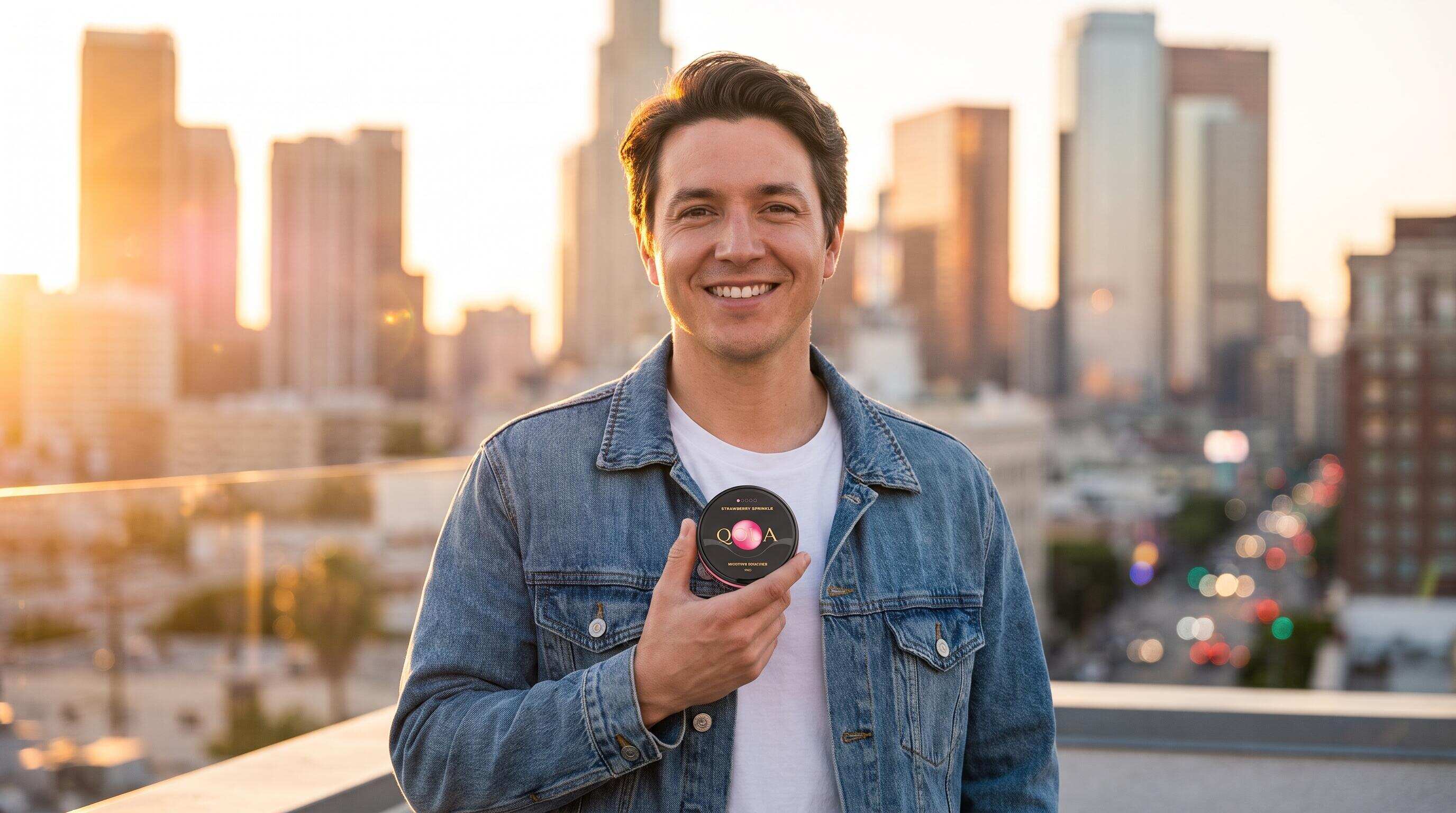
ALT: Diverse group of adults embracing a modern smoke-free lifestyle with QOLA tobacco-free nicotine pouches outdoors
Frequently Asked Questions FAQ
Q1: How do I find QOLA community spaces where people share their smoke-free experiences?
QOLA's community conversations happen across several channels — the brand's own social platforms, review sections on the website, and third-party forums where nicotine pouch users gather. The most practical starting point is the QOLA website itself, which surfaces real user feedback alongside product information. Wider nicotine pouch communities on platforms like Reddit (particularly subreddits dedicated to tobacco harm reduction and nicotine alternatives) also host active, candid discussions where QOLA users contribute alongside fans of other brands.
Q2: Are the stories shared in the QOLA community actually representative of typical user experiences?
Community stories, by nature, skew toward the engaged and motivated — people who had a strong enough experience to share it. This is a useful signal but not a statistical sample. The most reliable picture comes from reading a range of accounts, including those that describe difficulties or preferences that did not work, rather than focusing exclusively on positive testimonials. QOLA's transparency about its ingredient philosophy — documented in resources like the clean label promise outlining the additives excluded — provides a verifiable layer beneath subjective experience.
Q3: How long does it typically take to find the right QOLA strength and flavor for my needs?
Most users who engage with community feedback describe a calibration period of roughly one to two weeks. This is not a fixed timeline — it depends on your previous nicotine habits, your sensitivity, and how systematically you approach the process. The practical advice that emerges most often from experienced community members is to start with a strength slightly higher than you think you need (to avoid the dissatisfaction that sends people back to cigarettes) and then adjust downward if the initial choice feels too strong. Flavor is more immediately personal and often resolves faster — most people identify a preferred profile within their first few varieties.
Key Takeaways
The QOLA smoke-free community represents something more than a product user base. It is a living collection of honest, specific, diverse experiences from adults who chose a different relationship with nicotine — and are willing to describe exactly what that choice looked like in practice.
Three things stand out from everything explored in this article. First, specificity is the currency of useful community storytelling. Generic endorsements help no one; a detailed account of strength selection, flavor preference, and transition timeline helps many. Second, the range that QOLA offers — across flavors, strengths, and formats — means that the community's value scales with its diversity. The more different kinds of users share different kinds of experiences, the more useful the collective resource becomes. Third, joining the community is not a one-time act. The most impactful contributors engage over time, updating their stories as their experience evolves and responding to others' questions with the particular authority that comes from genuine, lived familiarity.
If you are at the beginning of your smoke-free journey, the community will meet you there. If you are further along and have developed real preferences and insights, your voice is exactly what newer members need to hear. Either way, your story belongs in the conversation.
Ready to explore a cleaner nicotine experience on your own terms? Visit QOLA's official website to discover the full range of tobacco-free nicotine pouches — multiple flavors, multiple strengths, no smoke, no vapor, no odor — and find the option that fits your life.
References & Further Reading
- qola.com. "QOLA Nicotine Pouches UK|No Smoking, No Vaping - Just qola".
https://qola.com/uk - U.S. Food and Drug Administration. "FDA Overview of Nicotine and Tobacco Products".
https://www.fda.gov - World Health Organization. "WHO Resources on Tobacco and Nicotine Alternatives".
https://www.who.int
Note: Standards, regulations, and product guidelines may be updated; please check the latest official documents or consult professional advisors for current guidance.
Comments
There are no comments yet.