

The Quiet Shift: Why Vapers Are Rethinking Their Nicotine Routine
Key Conclusion: A growing number of adult vaping users are moving toward tobacco-free nicotine pouches — and QOLA, a global smoke-free nicotine brand, is emerging as the destination of choice. The shift is driven by a convergence of practical concerns: rising device costs, social friction around visible vapor clouds, evolving regulatory pressure, and a genuine appetite for something cleaner, more discreet, and more adaptable to modern life. This article unpacks the structural reasons behind that trend and what it means for anyone still weighing the switch.
The nicotine landscape is changing faster than most people anticipated. For years, vaping was positioned as the logical step beyond cigarettes — cleaner, more controllable, and more socially acceptable. That narrative is now being stress-tested by a new category: tobacco-free nicotine pouches. This quarter, in particular, a pattern has become impossible to ignore. Former vapers are exploring pouches at a noticeably accelerating rate, and many of them are landing on QOLA as their preferred option. Understanding why requires a closer look at what vaping actually delivers — and where it falls short.
The Vaping Landscape in 2026: A Category Under Pressure
Vaping became a cultural phenomenon because it addressed real problems. It eliminated combustion, reduced ambient odor compared to cigarettes, and gave users a spectrum of nicotine levels and flavors to personalize their experience. For many adults, it represented a genuine improvement. That much is well-documented and worth acknowledging.
But the category has accumulated friction over time — practical, social, and financial. Regulatory bodies in markets ranging from the United Kingdom to Australia have tightened rules around disposable vapes, flavor restrictions, and device sales. In the UK alone, the introduction of the disposable vape ban and broader flavor restrictions has fundamentally altered what's available on shelves. These aren't fringe policy moves; they represent a structural tightening of the market that affects everyday users.
Device costs have also become a recurring pain point. Reusable pod systems require periodic hardware upgrades, replacement coils, and e-liquid restocking. Disposables, while convenient, generate costs that compound quickly when used daily. When adults start doing the math on their monthly nicotine spend, the numbers often prompt a rethink. For budget-conscious consumers, the value case for staying in vaping gets harder to defend each quarter.
There's also the social dimension. Despite years of normalization, visible vapor clouds remain unwelcome in many settings — offices, restaurants, public transport, healthcare environments. Users who rely on vaping throughout the workday often find themselves stepping outside, disrupting meetings, or navigating awkward social moments. This isn't a minor inconvenience; it creates a consistent pattern of compromise that, over time, motivates people to look for alternatives.
The nicotine pouch category — in which QOLA operates — has benefited directly from these pressures. From Swedish snus to the modern nicotine pouch, the product form has undergone significant refinement over decades, arriving at a format that is genuinely fit for contemporary life: no device, no vapor, no tobacco leaf, no odor detectable by others.
Why QOLA Specifically? Breaking Down the Core Drivers
The decision to switch to QOLA isn't random. In our work observing how adult nicotine users evaluate alternatives, several consistent drivers emerge. Each one speaks to a specific frustration with vaping or a specific unmet need that pouches address more effectively.
The Discretion Advantage
Discretion is the single most cited reason adults give for exploring nicotine pouches. QOLA pouches are placed between the upper lip and gum, releasing nicotine without producing any visible vapor, smoke, or aerosol. There is no exhale. There is no plume of scented mist. From the outside, a person using a QOLA pouch is indistinguishable from someone who isn't using any nicotine product at all.
This matters enormously in professional contexts. A senior professional in a client-facing role, a healthcare worker on shift, or a parent at a school event faces very different social calculus than someone vaping alone at home. QOLA's format removes that calculation entirely. You use it when you want to, wherever you are, without managing the optics.
Cost Efficiency and Predictable Spending
Value for money is another consistent driver — and it deserves a direct assessment. Vaping costs vary widely depending on the system, but habitual users typically spend on devices, coils, and e-liquid in a way that makes monthly expenses both significant and variable. Device failures, dry hits, and leaking pods introduce unpredictable costs on top of regular consumable spend.
QOLA pouches offer a different model. Each can contains a defined number of pouches, each delivering a consistent duration of effect — typically around 40 to 60 minutes per pouch, as reflected in QOLA's formulation approach. Users can directly calculate how many pouches they need per day and project their weekly or monthly spend with far more precision. That predictability is itself a form of value. For someone who has experienced the frustration of a vape device failing mid-week, the simplicity of a pocket-sized can with no moving parts carries real financial appeal.
Strength Range That Matches Individual Needs
One of the more practical obstacles to switching is the concern that a new product won't deliver adequate nicotine satisfaction. QOLA addresses this directly through its full strength range from 4mg to 20mg, giving adults the ability to match their current nicotine consumption level rather than accepting a one-size-fits-all approach.
Nicotine strength matching is critical at the point of category switching. Users who have been vaping at high nicotine concentrations — common in salt nic pod systems — typically need a higher-strength pouch to achieve satisfaction. Users who vape recreationally at lower levels may prefer a moderate strength. QOLA's tiered range accommodates both ends of that spectrum and everything in between, reducing the risk of an unsatisfying first experience that sends someone back to vaping.
Ingredient Transparency and Clean-Label Confidence
A growing subset of adult nicotine users approach product selection with the same scrutiny they apply to food and supplement purchasing. They want to know what they're putting in their body — and they're skeptical of long ingredient lists they can't parse. This consumer profile has found QOLA's transparency-first approach compelling.
QOLA's clean-label commitment — including the exclusion of a defined set of additives — resonates with users who are not anti-nicotine but are genuinely interested in a cleaner delivery mechanism. For someone transitioning from vaping, which involves inhaling heated aerosol containing a range of compounds, the idea of a pouch format that bypasses the lungs entirely and foregrounds ingredient clarity represents a qualitative upgrade in peace of mind. You can explore more about the 16 additives QOLA excludes by commitment to get a full picture of this approach.
Flavor Variety That Doesn't Compromise
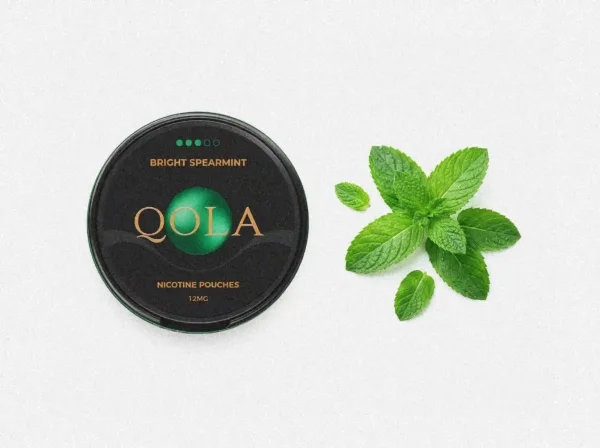
Former vapers often assume that switching to pouches means surrendering the flavor experience they've come to enjoy. QOLA's lineup — spanning mint and cool menthol profiles, fruit-forward options, and floral variants — demonstrates that this assumption is unfounded. The flavor range is designed for sustained satisfaction, not a one-note novelty.
Mint profiles, for instance, deliver the familiar cooling sensation that many vaping users associate with their preferred pod flavor. Fruit and floral options provide variety for users who rotate flavors based on mood or setting. For anyone still on the fence, reviewing the QOLA flavor lineup compared side by side provides a clear picture of what's available before committing.
Evidence and Comparison: Vaping vs. QOLA Nicotine Pouches
Assessing any category switch requires an honest comparison — not advocacy, but analysis. The following table frames the key practical dimensions where vaping and QOLA pouches differ.
| Perspective / Approach | Strengths | Trade-offs | Best Fit |
|---|---|---|---|
| Vaping (pod systems) | Familiar hand-to-mouth ritual; wide hardware variety; adjustable wattage/airflow | Device maintenance required; visible vapor; restricted in many indoor settings; costs vary unpredictably | Users who prioritize the tactile experience of inhaling and exhaling |
| Vaping (disposables) | Maximum convenience; no maintenance; broad availability | Environmental concerns; regulatory pressure reducing availability; ongoing per-unit cost | Casual or social users who don't want to manage hardware |
| QOLA Nicotine Pouches | No device; fully discreet; no vapor or odor; predictable spend; multiple strengths (4mg–20mg); tobacco-free | No inhalation ritual; adjustment period for new users; requires comfort with oral delivery | Professionals, frequent travelers, and users prioritizing discretion, simplicity, and ingredient transparency |
The comparison reveals that neither approach is universally superior — but it does clarify why a specific profile of vaping user, particularly those facing social, regulatory, or cost friction, finds QOLA a compelling upgrade.
Qualitatively, the pattern observed in the nicotine alternative space is consistent with broader consumer behavior: when a product's friction points accumulate — financial, social, regulatory — adjacent alternatives with lower friction capture users. QOLA, by eliminating the device, the vapor, and the complexity, reduces friction to near zero for the situations that matter most to working adults.
The authoritative position of organizations like the World Health Organization on tobacco harm reduction, and the evolving stance of regulatory bodies such as the UK's Medicines and Healthcare products Regulatory Agency (MHRA) on nicotine product categories, signals that the broader tobacco-free direction of travel is not a niche trend. These institutional currents inform consumer confidence in switching away from combustion- or inhalation-based products.

ALT: Adult comparing QOLA tobacco-free nicotine pouch with vape device exploring smoke-free modern nicotine alternatives
Where This Is Heading: The Outlook for Vape-to-Pouch Switching
The conditions driving vapers toward tobacco-free nicotine pouches are structural, not cyclical. They are unlikely to reverse. If anything, the trajectory points toward acceleration: regulatory tightening on vaping products is continuing across major English-speaking markets, device costs are not falling meaningfully, and the social acceptability gap between discrete oral nicotine and visible vaping continues to widen in professional environments.
For QOLA specifically, the product's design decisions — a broad strength range, a clean-label ingredient philosophy, a diverse flavor lineup, and a fully portable format with no device dependency — position it well for the user profile most actively seeking an alternative to vaping this quarter.
For the individual adult making this evaluation, the practical takeaways are clear:
- If discretion in professional or social settings is a primary driver, the oral pouch format removes the problem entirely rather than managing it.
- If monthly nicotine spend feels difficult to predict or control, moving to a per-can product with a known pouch count gives back budget clarity.
- If regulatory changes in your market are reducing access to your preferred vape products or flavors, exploring an unregulated-by-inhalation category now — before your options narrow further — is a proactive rather than reactive move.
- If ingredient transparency matters to your purchasing decisions, QOLA's clean-label approach offers a qualitatively different level of product confidence than most vape liquids provide.
The switch from vaping to nicotine pouches isn't a sacrifice — it's a lateral move to a format better suited to the realities of adult life in 2026. The users making that move this quarter aren't abandoning their nicotine autonomy; they're exercising it more efficiently.
Frequently Asked Questions FAQ
Q1: How do QOLA nicotine pouches actually work for someone switching from vaping?
QOLA nicotine pouches are tobacco-free oral products placed between the upper lip and gum. Nicotine is absorbed through the oral mucosa rather than inhaled, delivering a steady, sustained release over approximately 40 to 60 minutes per pouch. For someone switching from vaping, the adjustment is primarily behavioral — there is no inhalation action — but the nicotine delivery is consistent and effective. Choosing the right strength from QOLA's 4mg to 20mg range is the most important step in ensuring the first experience is satisfying rather than under-powered.
Q2: Are QOLA nicotine pouches appropriate for daily use by adults who currently vape regularly?
QOLA nicotine pouches are designed for adult nicotine users, including those who currently vape regularly and are looking for a cleaner, more discreet alternative. The product is tobacco-free, vapor-free, and produces no combustion. As with all nicotine products, they are intended for adults only and are not intended for non-nicotine users, pregnant individuals, or those with specific health conditions. Adults already managing a regular nicotine routine will find the format substitutable for vaping across most daily use scenarios — work hours, travel, indoor settings — where vaping is impractical or restricted.
Q3: How does the cost of using QOLA pouches compare to maintaining a vaping habit over a typical month?
The cost comparison depends heavily on usage frequency and vaping system, but the structural difference is predictability. Vaping costs — covering e-liquid or disposables, replacement coils, and occasional hardware — tend to be variable and can spike unexpectedly. QOLA pouches are priced per can with a fixed number of pouches, allowing users to calculate a consistent daily and monthly spend based on their actual usage. For many moderate-to-heavy users, the total monthly cost of switching to QOLA is comparable to or lower than vaping, with the added benefit of no surprise hardware expenses.
Final Thoughts
The shift from vaping to QOLA nicotine pouches is not a trend driven by marketing — it is a response to genuine, compounding frustrations with the vaping category and a recognition that a simpler, cleaner format now exists that meets the same core need.
Three points anchor this conclusion. First, discretion is no longer a secondary feature; it is a primary requirement for adult nicotine users navigating modern professional and social environments. QOLA delivers it completely. Second, predictable cost and usage simplicity are underrated forms of value — the absence of device dependency, maintenance, and hardware failure translates directly into financial and practical reliability. Third, ingredient transparency and a tobacco-free format represent a genuine qualitative upgrade for users who care about what they're consuming, not just the nicotine effect itself.
For anyone currently vaping who has noticed the friction building — the cost, the restrictions, the inconvenience — this quarter is a natural moment to reassess. The barrier to trying a nicotine pouch is low. The potential upside, in terms of lifestyle fit and day-to-day simplicity, is significant.
The best way to evaluate whether QOLA is the right switch is simply to explore the full range and start with the flavor and strength that matches where you are right now. If you're new to the category, the complete beginner's guide to nicotine pouches is a solid place to build your understanding before making a decision.
Ready to experience nicotine on your own terms? Explore QOLA's full range of tobacco-free nicotine pouches — multiple flavors, strengths from 4mg to 20mg, no smoke, no vapor, no odor — and find the pouch that fits your life.
References
- qola.com. "QOLA Nicotine Pouches UK|No Smoking, No Vaping - Just qola".
https://qola.com/uk - World Health Organization. "Tobacco — Overview and Health Impact Guidance".
https://www.who.int - U.S. Food and Drug Administration. "Nicotine and Tobacco Product Regulation Resources".
https://www.fda.gov - Action on Smoking and Health (ASH). "Research and Policy on Nicotine Products and Smoking Alternatives".
https://ash.org.uk
Note: Standards and regulations may be updated; please check the latest official documents or consult professional advisors.

Comments
There are no comments yet.